*
Hotel Reviews
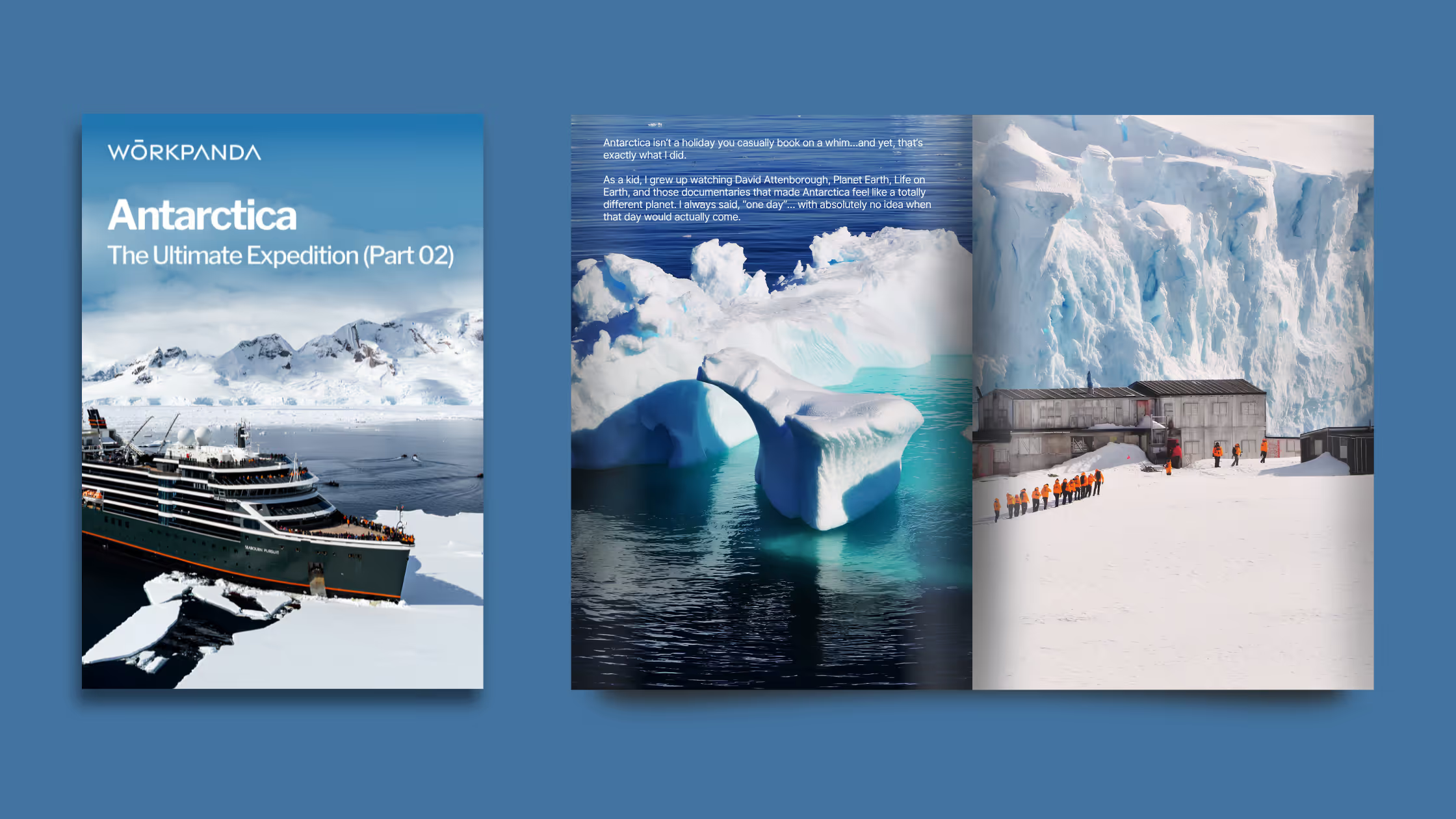
Antarctica isn’t a holiday you casually book on a whim…and yet, that’s exactly what I did.
As a kid, I grew up watching David Attenborough, Planet Earth, Life on Earth, and those documentaries that made Antarctica feel like a totally different planet. I always said, “one day”… with absolutely no idea when that day would actually come.
Years later, it still sat collecting dust in my mental bucket list.
Then one day I thought, sod it, I’ll just book it. No grand plan, no expectations, just go. Turns out that’s probably the only way to do Antarctica properly.
This isn’t a cruise in the traditional sense. There are no casinos or shows. It’s a true expedition. You get five-star comfort with every detail meticulously planned and led by people who genuinely know what they’re doing and are world-class subject matter experts. Each activity is purposeful and designed for safety, understanding and genuine exploration, not entertainment.
Here’s how my journey unfolded.
After flying into Buenos Aires from Dubai, the journey officially began at the Alvear Palace Hotel, a property that usually sits around the $800-a-night mark. Despite its reputation and classic charm, my stay was fairly average (It was included, but would I pay that if I had a choice? Eh, probably not).
Although, to be fair, we checked in late and were already departing at 6 a.m. for our transfer. It wasn’t long enough to justify a full review, plus the real story began the moment we left the hotel. It’s a great location though, with some nice shops and restaurants (PÁRU Inkas Sushi & Seafood - very good).


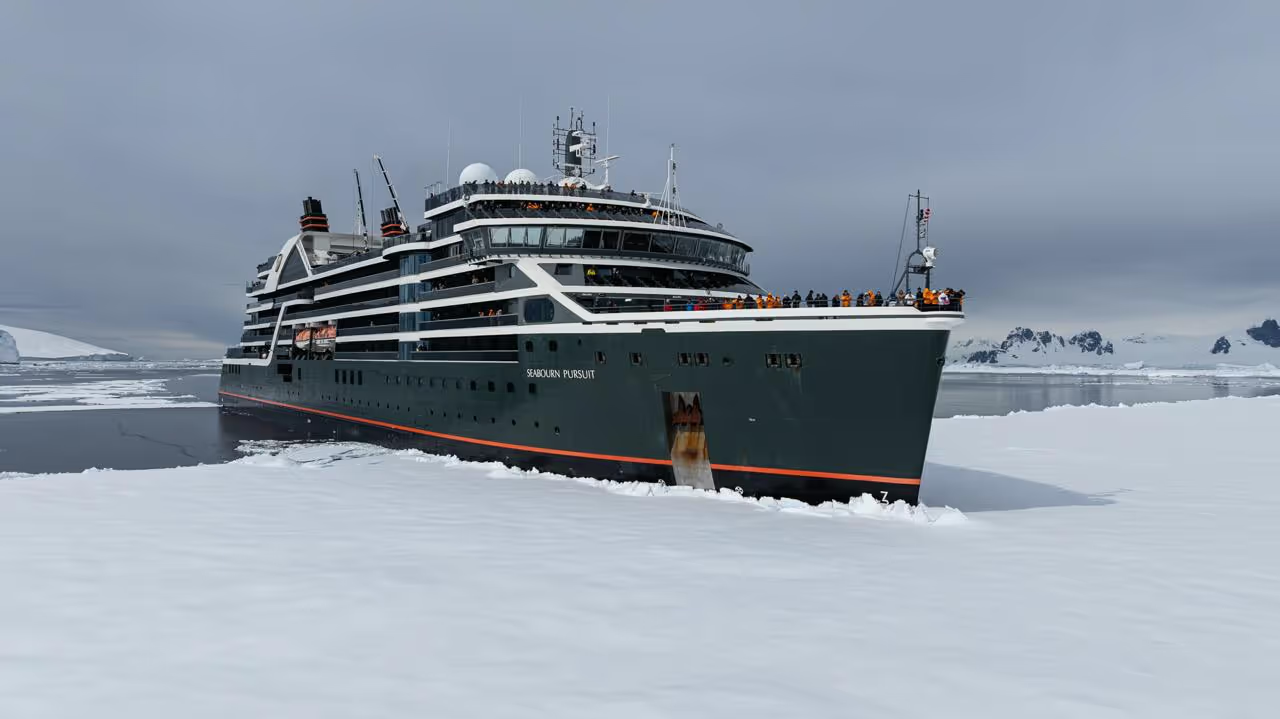
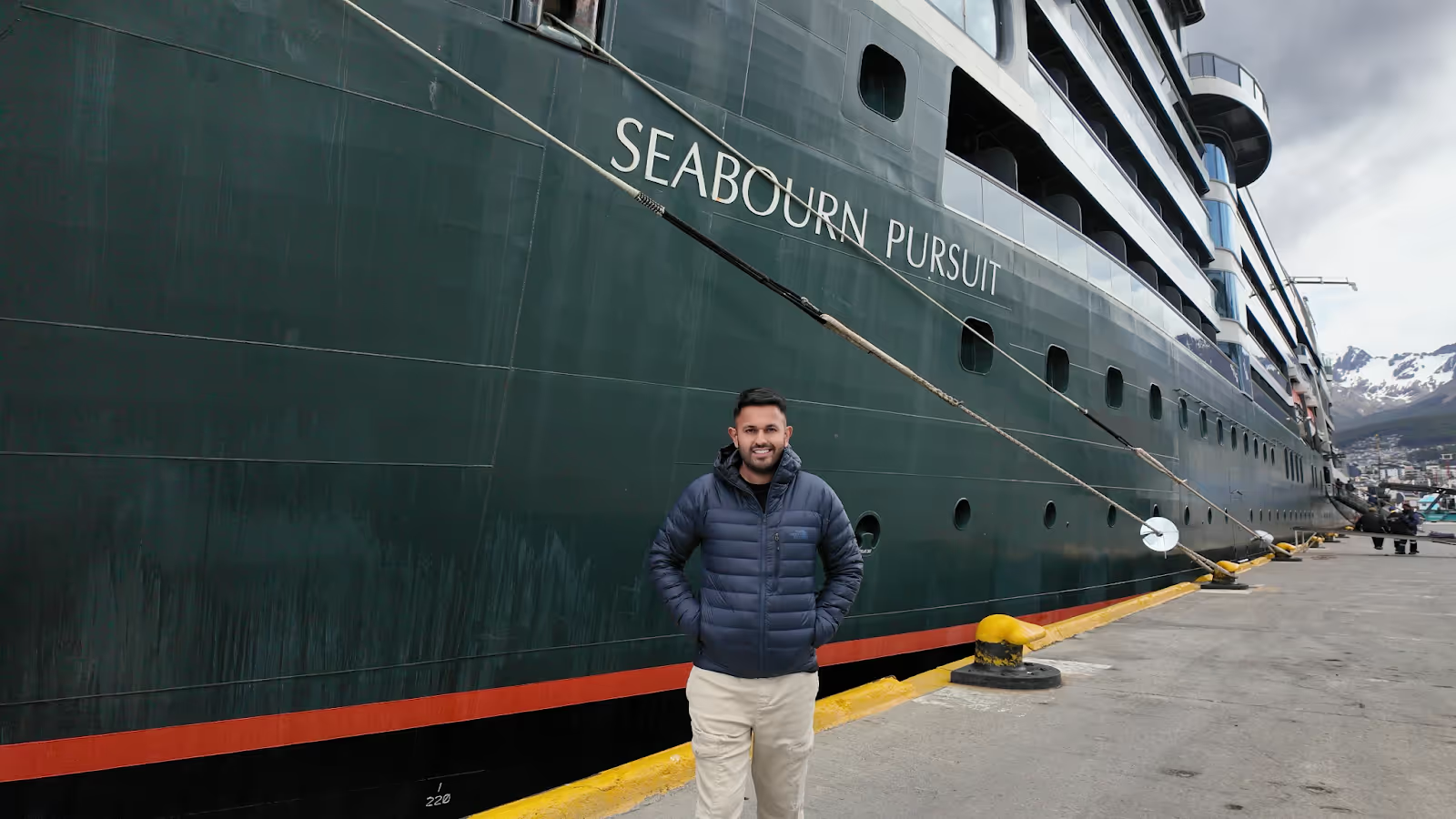
Seabourn Pursuit was created for true expedition luxury, designed inside and out by Tihany Design, New York under Adam D. Tihany and Alessia Genova, who blended the romanticism of early explorers with contemporary ultra-luxury details across all suites, restaurants, lounges, and public spaces.
The ship is owned by Seabourn Cruise Line and built by the Mariotti–Damen Cruise partnership, with its hull fabricated at the CI.MAR shipyard in San Giorgio di Nogaro before being transported nearly 1,900 km to T. Mariotti in Genoa for final outfitting.
Its PC6 polar-class naval architecture supports serious Arctic and Antarctic operations, powered by Wärtsilä 12V32 diesel engines delivering around 23 MW and an ABB propulsion and electrical package featuring twin 6 MW Azipods and integrated monitoring systems.

What immediately stood out to me was the precision and professionalism of Seabourn’s logistics. From the hotel pickup to the airport, the charter flight to Ushuaia (aeroplane food was bang average, felt like a school trip), and the transfer to the port – everything ran with near-military coordination.
Luggage handling, check-in, and safety protocols were seamless and efficient. Your bags are collected from the hotel the night before, so you need to keep a small backpack with essentials for 24 hours. You won’t see your main luggage again until you arrive in Ushuaia and eventually, it will be waiting for you inside your cabin, fully labelled and handled well throughout the journey.
The entire transfer experience is effortless and completely stress-free, exactly what you’d expect from one of the world’s leading ultra-luxury cruise lines. After originally booking with Atlas Cruises, I’m genuinely glad we chose Seabourn; it exceeded all expectations.
Seabourn, part of the Carnival Corporation family (invested by PIF, Blackrock, Vanguard), has built its reputation on exceptional service and attention to detail, and rightly so. From the moment you arrive, the experience is so refined that it’s almost as if someone took Marsa Al Arab, set it afloat, and sent it to impress the Southern Ocean. The craftsmanship, the finishes, and the overall sense of luxury are genuinely on another level.
While the ship itself is stunning, the real highlight were the people, both the guests and crew. Many passengers are seasoned travellers with stories that could fill entire books, and with the average age between 50 and 55, I quickly realised I was one of the youngest on board. Oddly enough, that became a part of the appeal. You’re surrounded by people who’ve already been everywhere, done everything, and aren’t trying to prove anything. The conversations reflect that - thoughtful, curious, and unhurried, giving the whole experience a depth you don’t always find whilst travelling.
The expertise of the expedition team is remarkable. As I mentioned earlier, every team member is a specialist (lecturers to scientists), from geologists and zoologists to marine biologists, conservationists and more. The onboarding briefing was thorough and engaging, outlining the ship, the itinerary, the safety expectations, the environmental protocols, and what the next nine days would look like.
Life on the Seabourn Pursuit is a mix of exploration and comfort. The core of the experience is the daily excursions on expedition boats called Zodiacs, used to reach shore with the ship holding position well offshore to minimise disturbance.
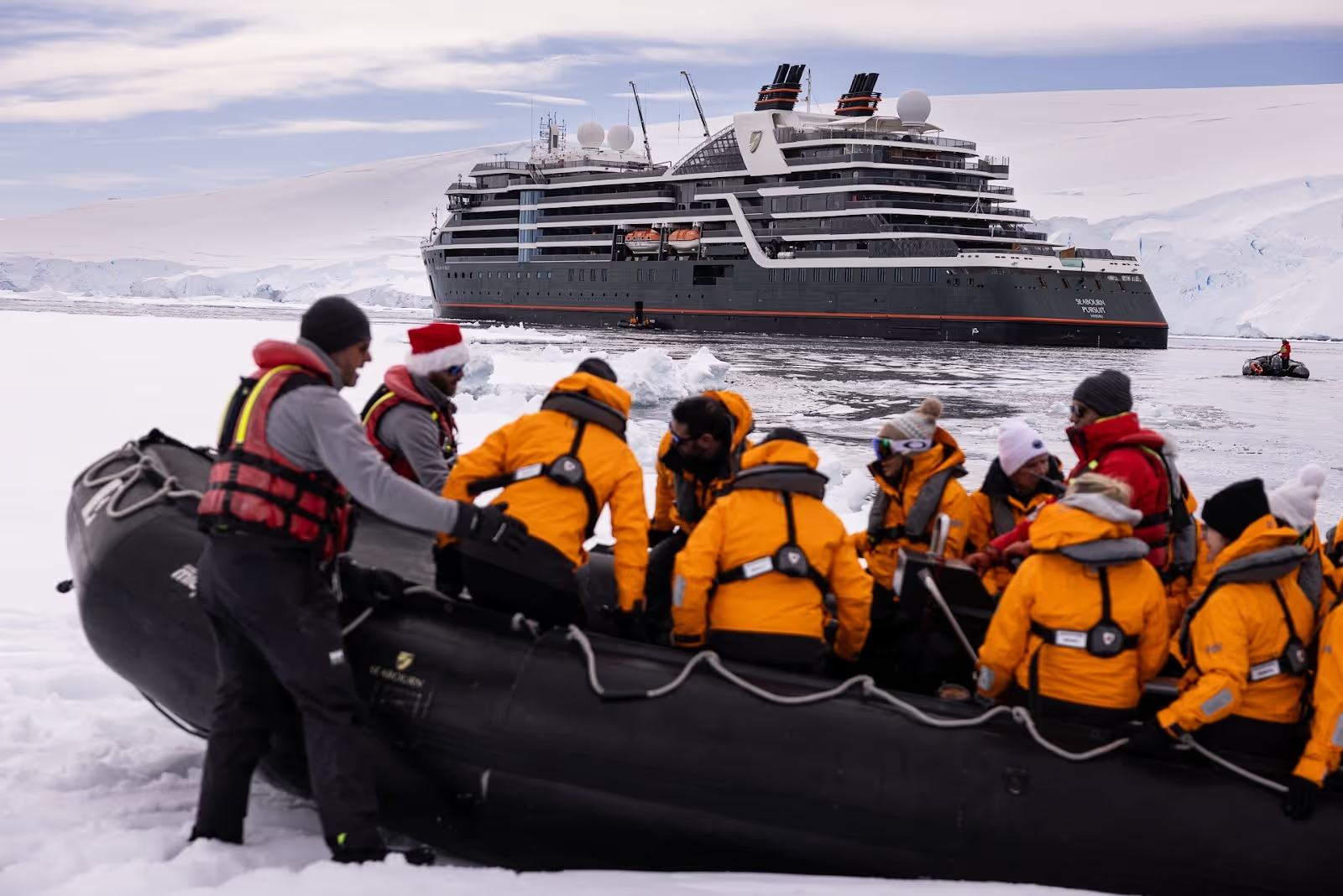

When the weather permits, you head out in small groups to different parts of the Antarctic region, visiting glaciers, penguin colonies, ice fields, and wildlife hotspots. No two outings are the same, and each one feels like a new chapter in the expedition.Once back on board, the day is filled with talks and presentations from the ship’s expert team. These sessions are short, engaging, and provide useful context for everything you see outside.
The quality of dining on board is closer to a high-end hotel than an expedition ship, with multiple venues ranging from refined fine dining to relaxed, casual options. Menus change daily, ingredients are consistently fresh, and after long, cold excursions, the food feels both comforting and indulgent. Service is equally great, both attentive, and intuitive; present when you need it, invisible when you don’t.
Beyond the expedition activities, the ship functions like a luxury hotel. There is a well-equipped gym, a spa with treatment rooms and a sauna, hot tubs, a salon, lounges for relaxing, and quiet spaces for reading or working. The pace is calm but never boring, there is always something to do and to look forward to.
On Seabourn Pursuit, every Antarctica landing begins with mandatory safety and biosecurity briefings. Antarctica has no immunity to foreign bacteria, so strict contamination control is essential: all clothing is vacuumed, boots are disinfected before and after every landing, and nothing that sheds fibres is allowed ashore.
Wildlife rules are equally strict: keep a minimum 5-metre distance, never walk between animals, and let penguins approach you, not the other way around. Touching wildlife is completely prohibited, food can’t leave the ship, and drones are banned to protect the environment.
And yes, despite the common misconception, there are no polar bears in Antarctica (wrong pole). Only 100 passengers are permitted ashore in Antarctica at any one time, ensuring strict environmental protection, so you usually go to islands in groups.
These protocols may seem intense, but they’re designed to protect one of the last untouched ecosystems on the planet. (You will be surprised by how stupid people can be!)
Leaving Ushuaia, we entered the Drake Passage, one of the most notorious stretches of water on the planet. High winds, aggressive 3 meters swell, and waves big enough to make you question your life choices. The ship rolled constantly as the captain carefully navigated the conditions, adjusting speed and course to keep things as controlled as possible.
I won’t sugar-coat it…it was choppy, and yes, I felt seasick. Most people come armed with motion-sickness tablets, patches, wristbands, or all of the above, and the medical team is on hand if things get a bit rough.
Some passengers disappear into their cabins, others sit in the lounges pretending they feel “absolutely fine” while gripping onto their chairs for dear life. Either way, you’ll survive, and once you’re through the Drake, you earn the right to say you’ve properly arrived in Antarctica.

Once the Drake Passage is behind us and the ship enters Antarctic waters, the experience shifts from sea days to full expedition mode. Seabourn Pursuit runs a “no fixed schedule” approach, every landing is decided by the Expedition Leader to ensure safety and maximise wildlife encounters.
When we wake up, usually around 6:30am, the ship is already positioned near our first landing site. After breakfast, we gear up, disinfect our boots, and head to the mudroom to board Zodiacs.
A typical day includes two major expedition activities (depending on the weather), one in the morning and one in the afternoon. These can be:
After returning to the ship, we disinfect all gear again, warm up, and have lunch while the captain repositions the vessel. Afternoon activities start around 1:00pm and run until about 5:00pm, depending on the daylight and conditions.
Evenings onboard are calm: daily recap briefings, talks from the expedition team, photography workshops, or simply watching humpbacks, seals, and penguins from the Observation Lounge. Because Antarctica is unpredictable, the itinerary updates daily and sometimes even hourly.
This continues for five full days of landings and Zodiac operations (10–14 total experiences), until we turn north again toward Drake Passage for the return crossing.
Day 1 – Wednesday
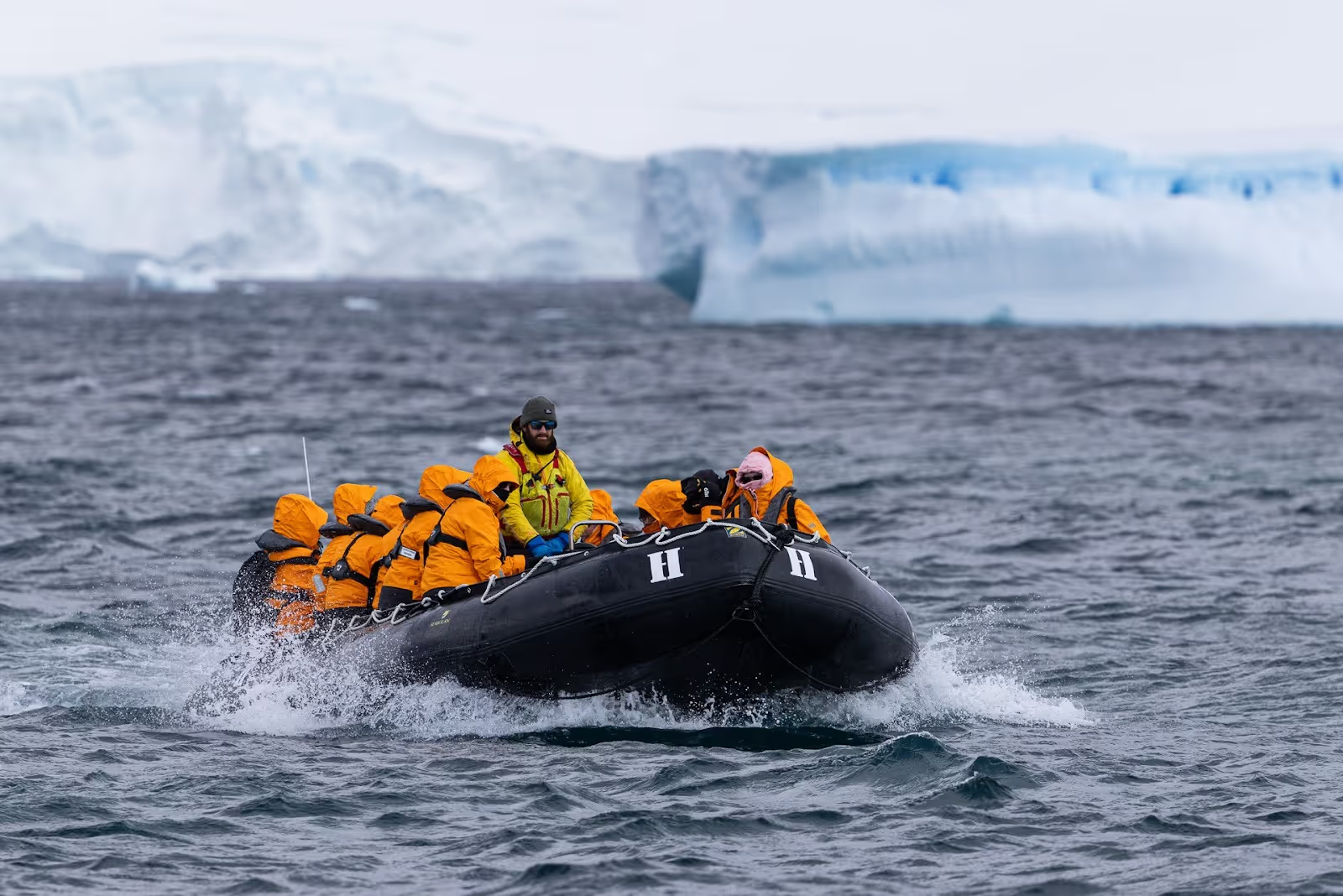
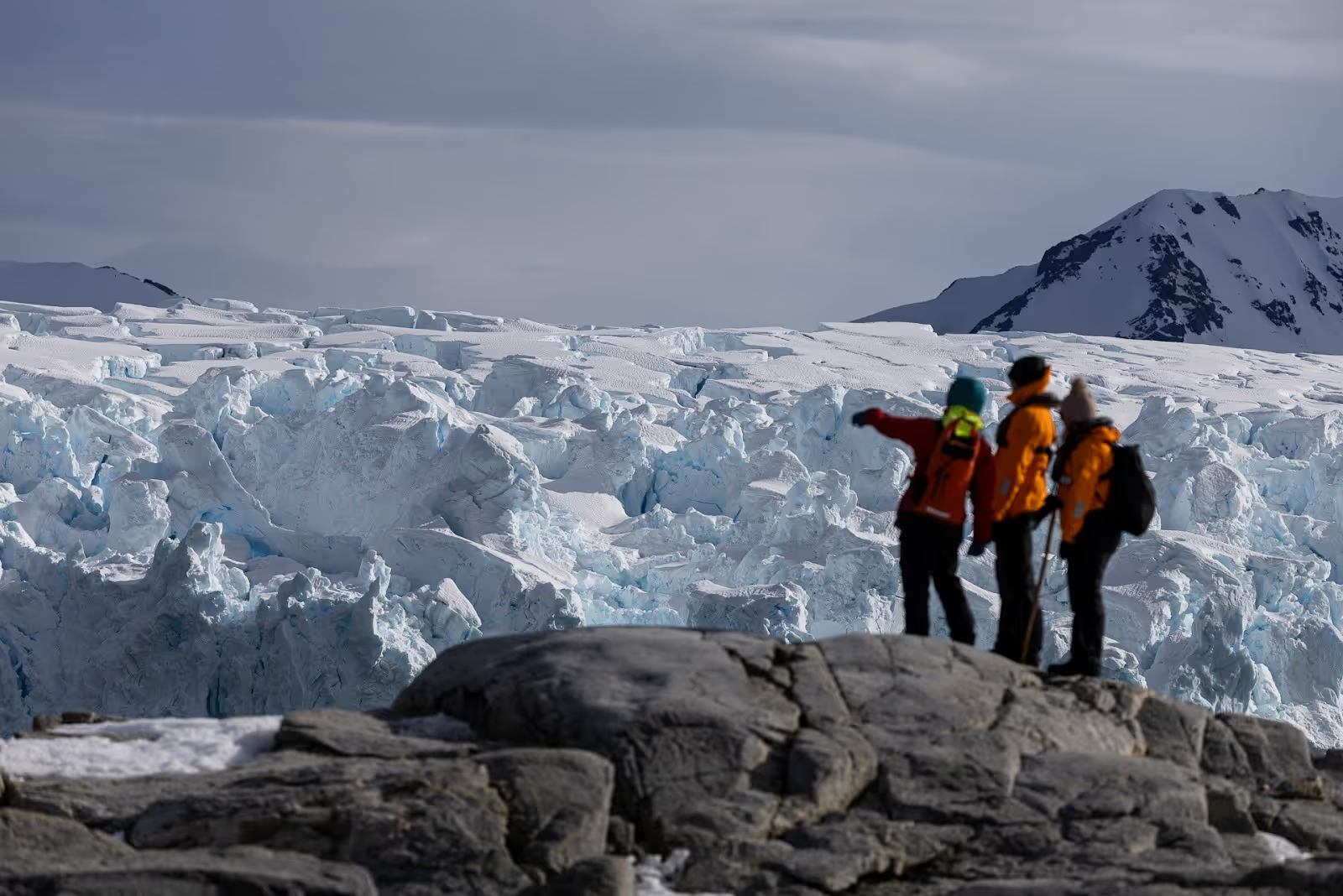
Getting there was no joke, a proper Antarctic wake-up call. The Zodiac ride was rough, the kind where instinct makes you hold on a little tighter, and the one-degree temperature felt more like a minus five once the wind slapped you in the face. The snow was deep enough to swallow your boots, so it was either walking sticks or slow, careful steps all the way. Credit to the crew though, their navigation was flawless, even with salty spray blasting sideways like a free exfoliation treatment.
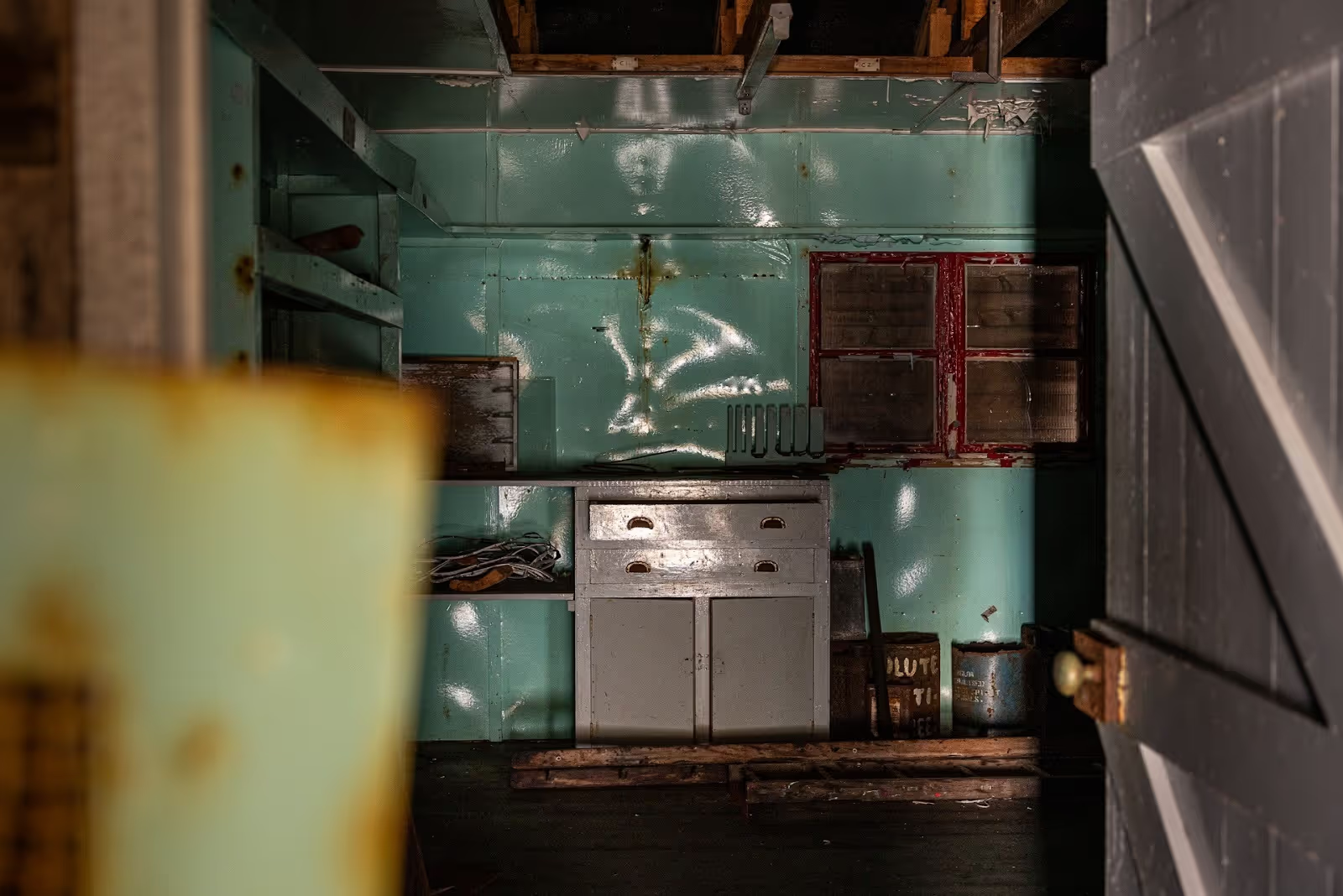
Stonington/Jenny Island (in Marguerite Bay, South of the Arctic Peninsular) itself felt like a frozen time capsule. The old British Base E and the American East Base are still there, battered, buried, and clinging on like ghosts from the early days of polar science. Inside, you find old tins and rusted tools, and for a second, I genuinely expected to see Branston Pickle on a shelf, but sadly the Brits didn’t leave any behind.

The island is tiny, sharp, and completely exposed, with a few Adélie penguins, skuas, and the occasional seal drifting past. People in our group claimed they saw a penguin sneaking between the rocks, but every time I looked, nothing. My luck is impeccable.

Day 2 – Thursday (travel through the night)
Adelaide Island is definitely the cinematic side of Antarctica, the part you see in documentaries where everything is bigger, brighter, and impossibly untouched (or in Titanic or Ice Age :D). The island is dominated by towering glaciers and endless ice cliffs, each one stretching across the horizon like a frozen wall. The scale is ridiculous, and it makes you feel unbelievably small, almost like you have wandered into a place the world forgot to mention.
Out on the water, you move through a belt of towering, sculpted icebergs, electric-blue cracks, and thick sheets of pack ice drifting silently around you. We were cruising through nearly half a metre of cracked ice, the Zodiac gently crunching its way forward, somehow feeling both surreal and slightly unhinged.
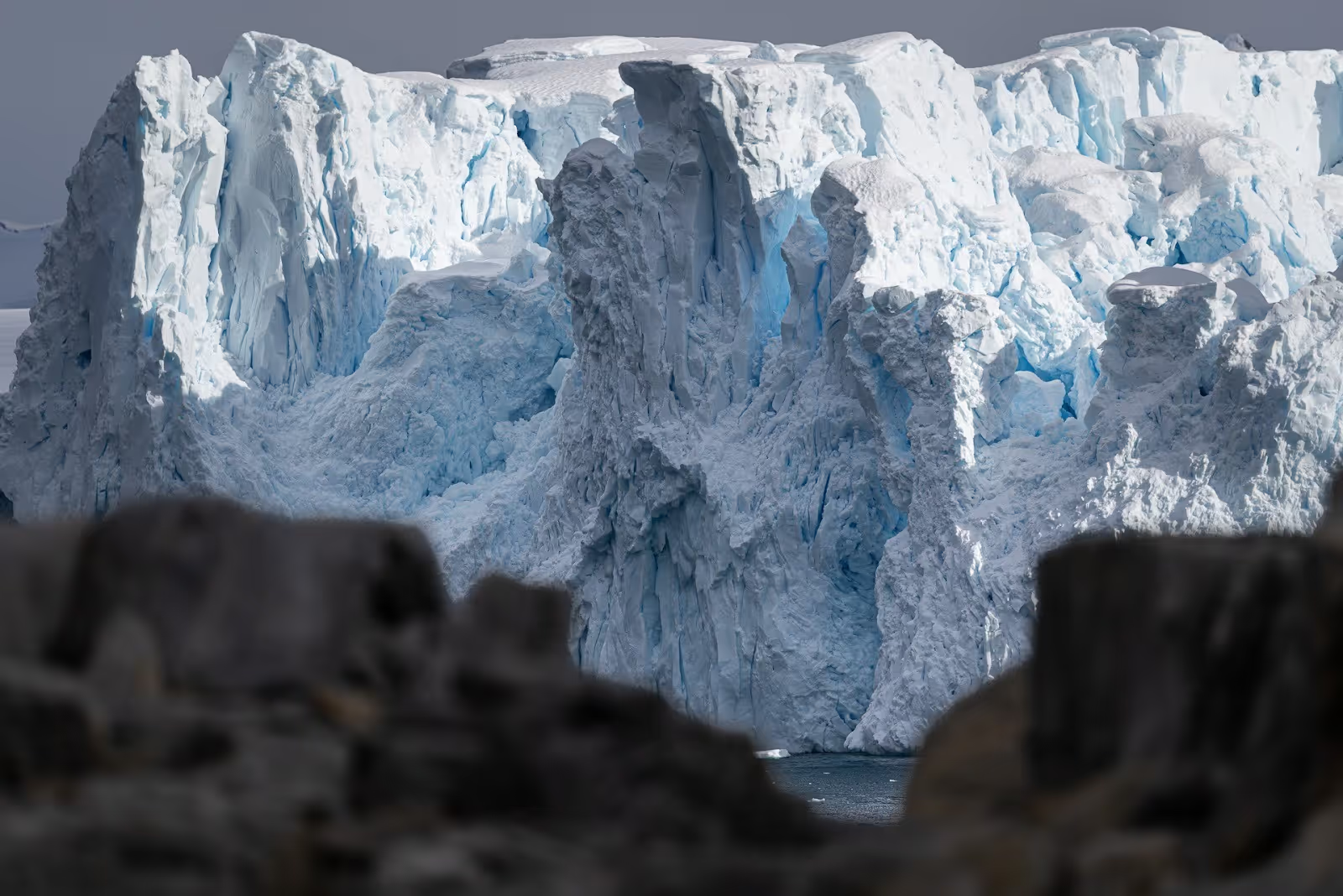
Every turn felt different. Sometimes calm, sometimes eerie, and sometimes so quiet that the only sound was distant ice cracking somewhere far off. A couple of people on the boat claimed they spotted seals lounging on the floes, and someone swore a penguin launched out of the water like a missile. Naturally, every time I looked… nothing. My timing, as always, absolutely impeccable.
The wildlife here is scattered but magical when you find it, groups of Adélies waddling along the snow, the occasional skua circling overhead, and if you are lucky, a whale surfacing (that I missed) in the distance just to remind you that Antarctica has its own rules.
Then came the surprise: champagne on the ice. Standing in the middle of Antarctica, surrounded by icebergs, holding a glass of bubbles, because apparently this is how exploration is done now. No complaints here, though.

Day 3 – Friday
Overnight, we travelled through the Lemaire Channel, often called Kodak Gap, one of the most scenic passages in Antarctica. This narrow stretch near Booth Island is framed by steep, glaciated cliffs and towering peaks rising almost vertically from the sea. Drifting icebergs often narrow the route, making navigation slow and precise.
It’s known as the Kodak Gap for a reason. Every angle feels like a postcard, with mirror-like reflections on calm days and shifting, cracking ice on others. We’re passing through enroute to Neko Harbour, one of the most striking landing sites on the Antarctic Peninsula.
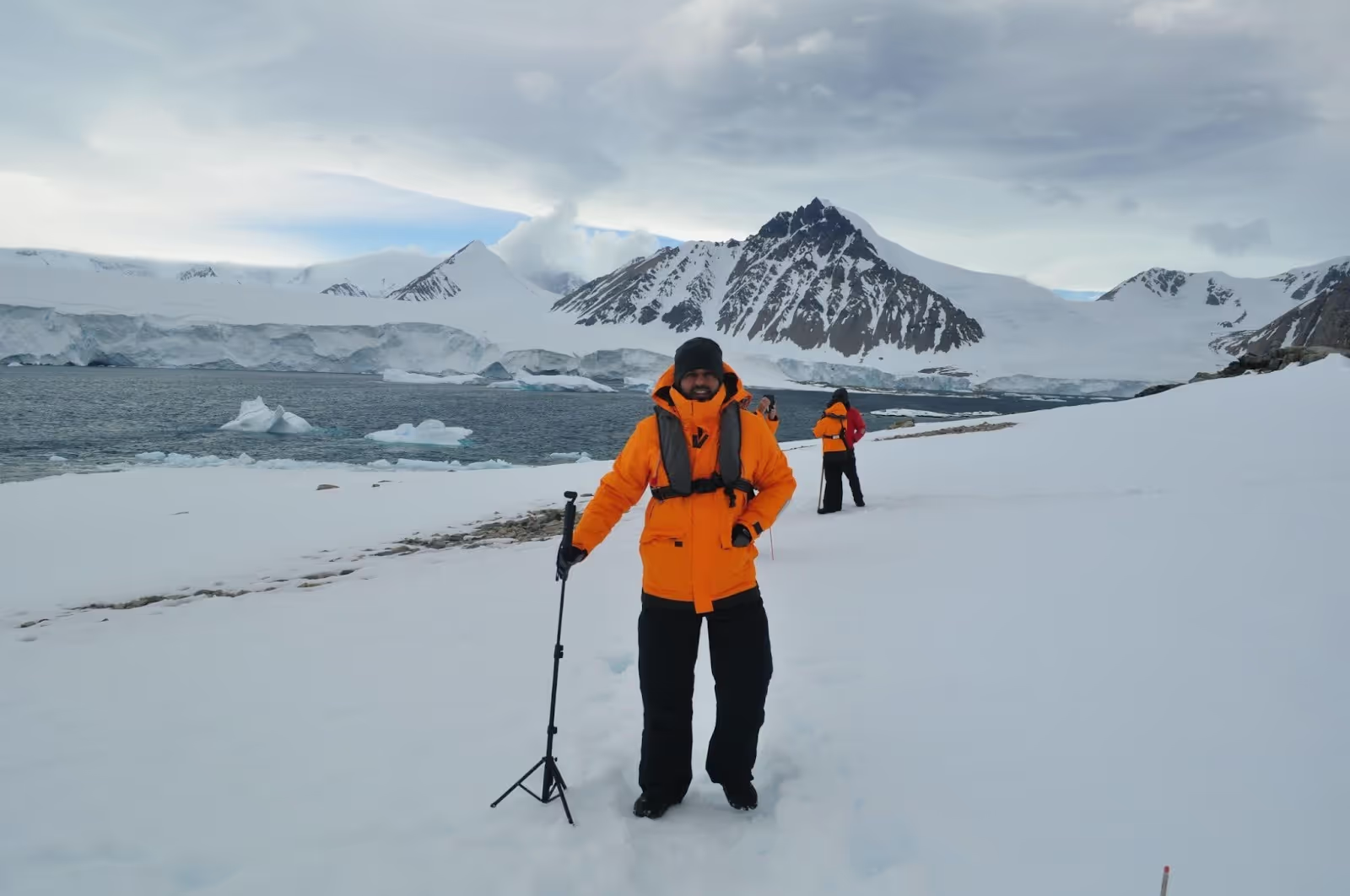
Neko Harbour is one of those places that just hits you: the real Antarctica, the mainland, the one everyone imagines but few actually touch. It’s wild, cinematic, almost unreal, like you have walked straight into a scene where the glacier is the main character, and you are just an extra trying not to slip on the snow.
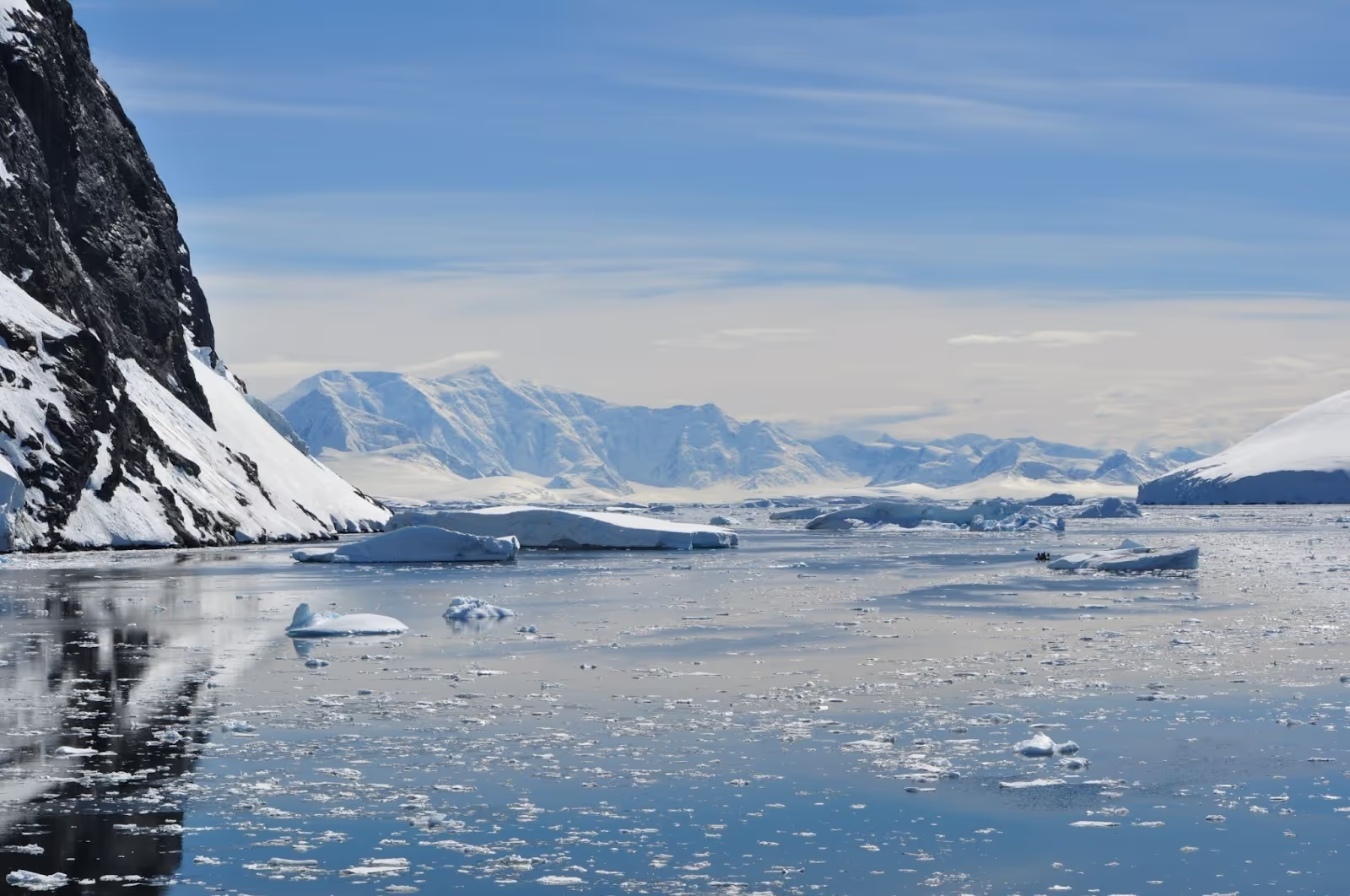
Looking around these towering ice cliffs and deep blue crevasses, you realise how tiny you are in the grand scheme of things. The water is scattered with sculpted icebergs and drifting chunks of pack ice, moving silently except for the occasional calving boom that makes everyone on the boat pretend they did not jump. The penguins steal the show of course.
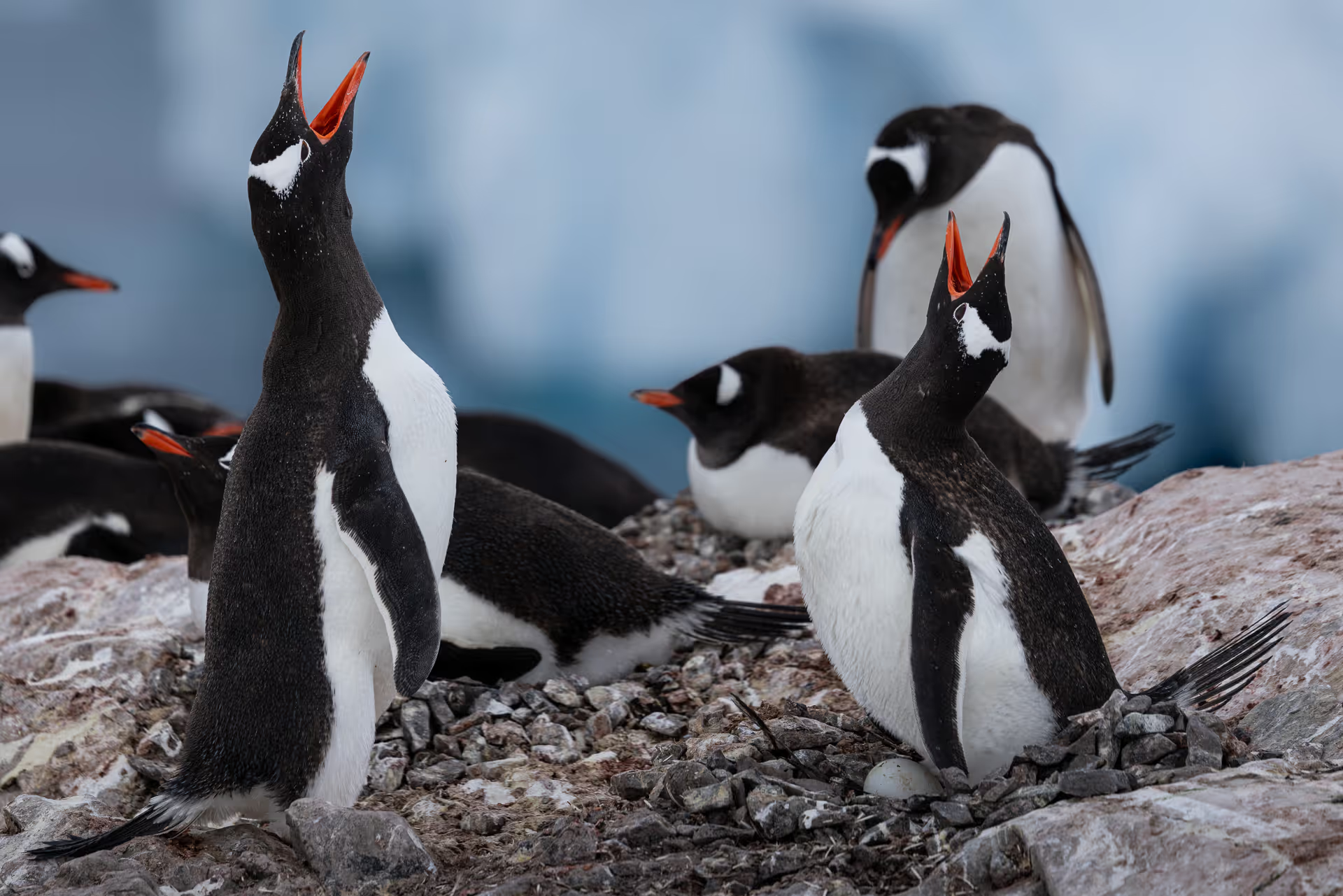
Gentoo highways zig zagging across the snow, chicks screaming for food, adults stealing pebbles like it is a full-time job. One of the guys on our landing apparently saw a penguin torpedo pass underwater but as usual, every time I looked I saw nothing. My impeccable luck strikes again.
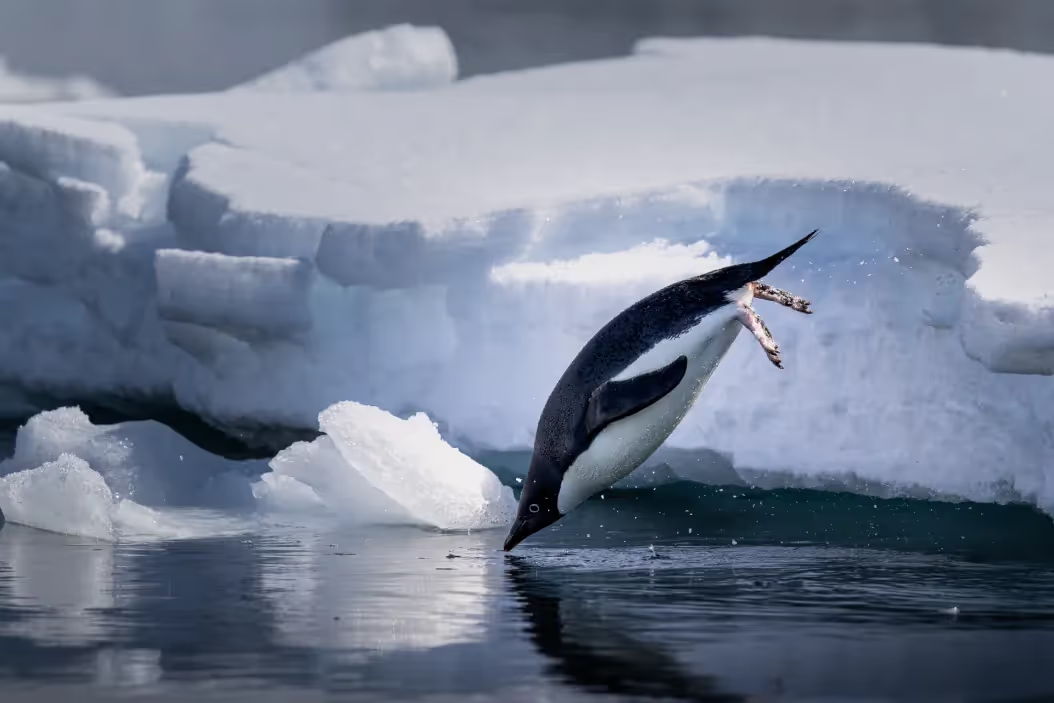
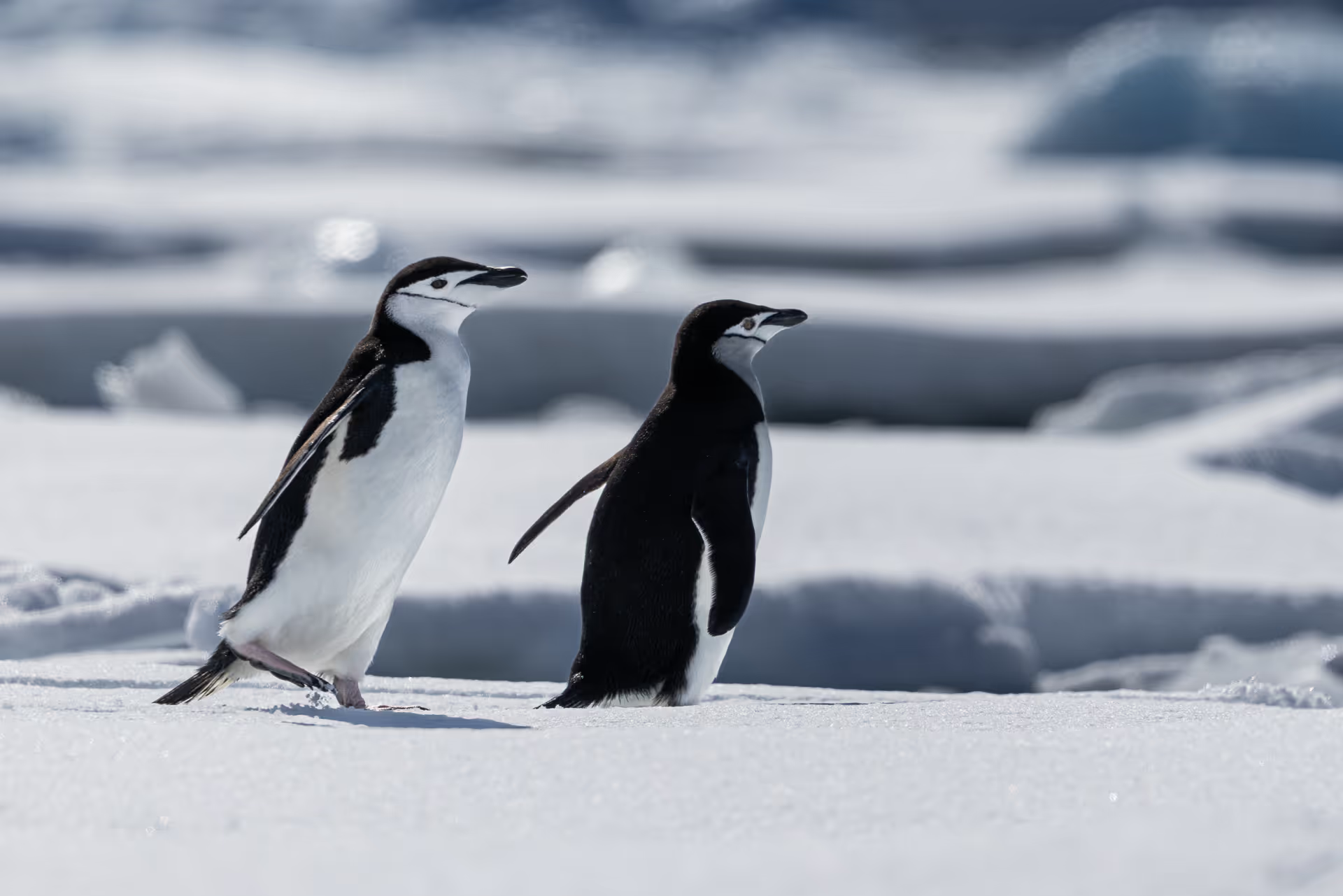
At the same time, Neko Harbour is not really about wildlife, it is about the feeling of stepping into the soul of Antarctica: a place untouched, overwhelming, and completely unforgettable.
Day 4 – Saturday
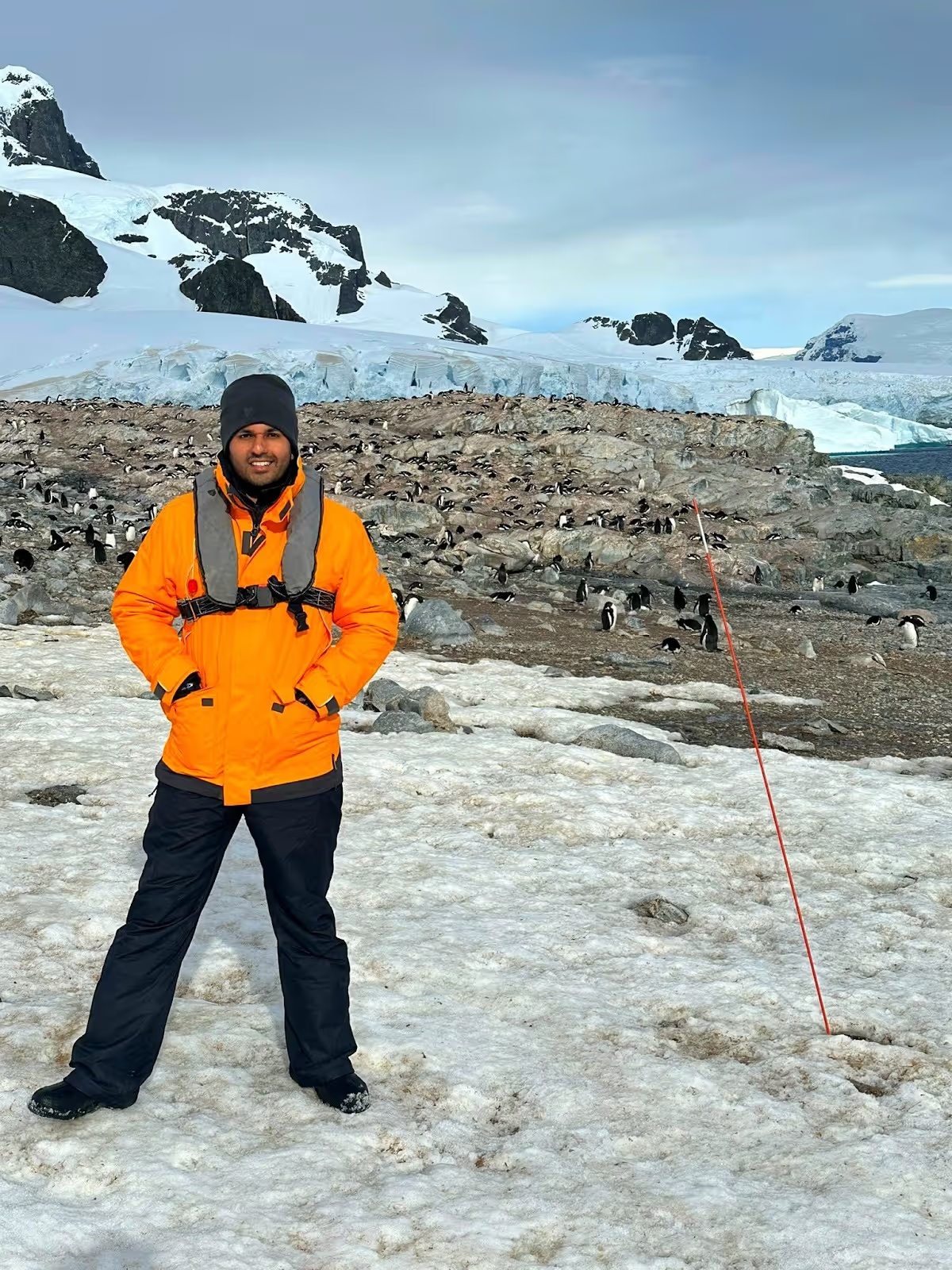
Overnight, we sailed deeper into the Antarctic Peninsula, arriving at Cuverville Island, a small but dramatic outcrop surrounded by towering glaciers and dense fields of icebergs. Home to one of the largest Gentoo penguin colonies in the region, it’s classic Antarctica at its best– unbelievably beautiful with penguins everywhere, the constant hum of life, and photo opportunities in every direction.
We then moved on to Danco Island, where the day really came alive. Penguin watching here felt intimate and immersive, watching them waddle, slide, and interact against a backdrop of ice-blue glaciers and endless white horizons. Along the shoreline, we also spotted Weddell seals and Crabeater seals sprawled out on the ice, completely unbothered, perfectly adapted to this extreme environment.
The kayaking was on another level, gliding through the water, weaving between floating ice and glacier walls. As if that wasn’t enough, we were lucky to see humpback whales, surfacing and disappearing again into the icy depths right near our kayaks (yes, I actually saw them this time, hah!). It was one of those moments that makes time slow down.
And then came the polar plunge. Equal parts excitement and questionable judgement. Absolutely freezing, shock-to-the-system cold. The kind of cold that makes you instantly regret everything. Still, I survived, and yes, I do actually know how to swim… just not for very long in Antarctic waters (the sea water was violently salty).
A day packed with once-in-a-lifetime encounters, raw nature, adrenaline, and memories that no photo or video could ever truly do justice to.
Day 5 – Sunday
Then came Deception Island, which couldn’t feel more different. From the outside, it looks unremarkable, until you pass through Neptune’s Bellows and sail straight into the centre of an active volcano. A flooded caldera. An island you don’t land on, you enter.

Here, the landscape flips completely. Black volcanic sand replaces white snow, steam rises from the ground, and rusting remains of old whaling stations and research bases sit scattered along the shore, frozen in time. In places, the ground is warm beneath your boots, a surreal reminder that this place is very much alive.
We landed at Telefon Bay, one of the most striking areas on the island. The contrast is jarring, jet-black sand against snow-dusted ridgelines, twisted volcanic rock, and wide open space that feels more like another planet than the polar south. There’s a deep stillness here, broken only by the wind and the occasional hiss of steam escaping from the earth beneath you.
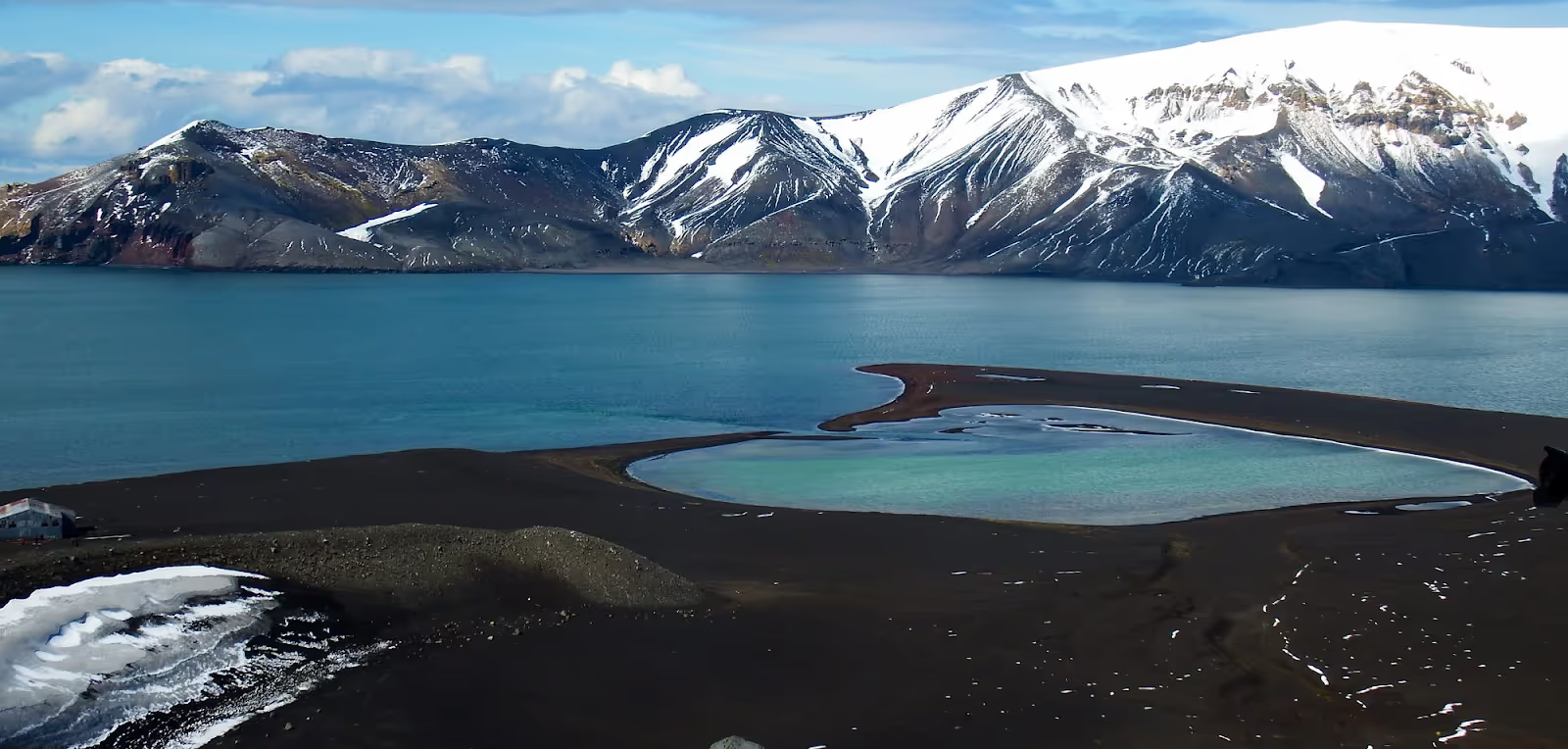
Deception Island is dramatic, eerie, and layered with a history of exploration, exploitation, science, and survival, all wrapped inside a volcano that could assert itself at any moment.
A lot of people assume Antarctica is permanently brutally cold with temperatures of minus 20 to minus 30 degrees. That can be true in winter, but it’s not the full picture.
In summer, when most expeditions take place (including mine), temperatures are often around 0 to minus 1°C, which is actually quite manageable, especially if you’re used to colder climates. What really makes Antarctica feel cold isn’t the temperature itself, but the wind. The chill from the wind can be intense and is what cuts through you, making it feel far colder than the numbers suggest.
In winter, yes, conditions become extreme and temperatures can drop dramatically. That’s also why expedition ships rarely operate during those months, as the weather and sea conditions are simply too harsh.
Everything for the ship and expedition was booked through my agent, Liv & Travel, and she was amazing as always. I honestly could not recommend her more highly. When it came to flights, I booked directly with Emirates Airlines, simple, straightforward, and no issues at all.
In terms of clothes and what to pack, do not overthink it and definitely do not overpack. There is a washing machine and dryer on board, so you can rewear your clothes without stress. The essentials are merino under garments for long sleeves, good gloves, sunglasses, sun cream, and high quality outer layers.
Seabourn gives you an under jacket and a parka (and a beanie), so you do not need to bring heavy jackets, maybe just a fleece for layering. We travelled during the Antarctic summer, so it was not “freezing” freezing. Yes it was cold, but absolutely bearable. A pair of comfortable trainers and some smart casual shoes are more than enough. Seabourn also gives you proper expedition boots, so no need to bring any.
I also took my laptop and bought an Osmo Pocket 3 for filming. If you are a photo fanatic, you can bring a good quality DSLR, but it is not necessary at all. Modern phones take incredible photos and videos, especially in bright Antarctic light, so you will be fine with just your phone if that is all you have.
My entire suitcase for three weeks was 20kg, including a few T-shirts and trousers for Buenos Aires, and honestly that was perfect. Keep it simple, pack smart, and enjoy the experience.
This expedition is for curious travellers who value learning over entertainment, enjoy purposeful exploration, and are comfortable with cold conditions, ship movement, and flexible daily schedules.
It’s not for party-cruise travellers, those seeking constant stability, or anyone expecting pool decks, casinos, or Broadway-style shows.
A trip to Antarctica is undeniably one of the more premium travel experiences you can undertake, and it comes with a substantial overall cost once everything is considered (Around $15-$20k). In my case, this included Emirates Business Class flights from Dubai to Buenos Aires via Rio de Janeiro (with one sector redeemed on points), an overnight stay at the Alvear Palace Hotel as part of the expedition package, and four additional nights in boutique hotels in areas such as Palermo and Recoleta.
Importantly, this does not include all additional personal expenses, excursions or incidentals along the way, which can further add to the overall spend.
Daily costs in Buenos Aires add up quickly with meals, wine bars, taxis, and guided tours across the city. Specialist cold-weather gear is non-negotiable, from merino thermals to waterproof layers, gloves and snow pants, and easily reaches over $1,500.
The core cost is the Seabourn Pursuit expedition itself, which covers all landings, Zodiacs, kayaking ($500 additional), fine dining, accommodation, safety teams, environmental compliance, and the logistics required to operate in the world’s most remote region. Expensive, yes, but a genuine once-in-a-lifetime journey worth doing before life gets more complicated.
If you have any questions, feel free to leave a comment and I’ll do my best to answer.
I can honestly say it has been one of the greatest experiences of my life. Antarctica is overwhelmingly beautiful, and no photo or video can capture what it feels like to stand in front of its glaciers and wildlife. I still can’t fully describe how powerful this trip has been for me.
Seabourn’s Antarctica expedition is one of the more premium options, but now I understand exactly why. It’s not just the cruise you pay for. You are paying for safety, knowledge, comfort, and access to one of the most remote and meaningful places on earth. The logistics are flawless, the ship feels like a floating luxury hotel, the dining is exceptional, and the expedition team is world class. Every moment is delivered with care, expertise, and genuine passion.
And for me, it was worth every second.
If you are considering Antarctica, I would wholeheartedly recommend Seabourn (don’t cheap out, do your homework). It is an investment, but it is also the kind of experience that stays with you forever.
This was genuinely a life changing adventure, and I hope you get to experience it one day too.