London Hilton on Park Lane: Is This Still London’s Best Address?

category

*

Hotel Reviews

I don’t actually get to experience London hotels properly that often because most of the time when I’m back here, I end up staying at my family home. It’s just easier (and free).

But back when I was working at PIF, it was a different story. The budgets were strong, so I had the chance to stay at some of the best hotels in the city - places like The Langham, The Edition, Sanderson, and a handful of other top-tier 5 star properties.

Now that it’s coming out of my own pocket, the decision making changes slightly.

This time, I wanted to try something different, in a location I genuinely enjoy spending time in. For me, booking a hotel in London isn’t really about the room, it’s about the postcode.

Scroll through any booking platform and you’ll see the usual mix: boutique Mayfair hotels, lifestyle brands, ultra luxury names all trying to justify their rates with “experiences.” I’ll be honest, I did look at the newly renovated Rosewood Chancery Lane, but at around £1,300 a night, I’d need to close a few more deals before justifying that.

Then there’s London Hilton on Park Lane…

I’ve driven past it countless times thinking, “I’ll stay here one day”, and while I’ve been fortunate enough to stay at some of the best hotels in the world, that curiosity never really went away.

The Building, The Brand & What You’re Really Buying

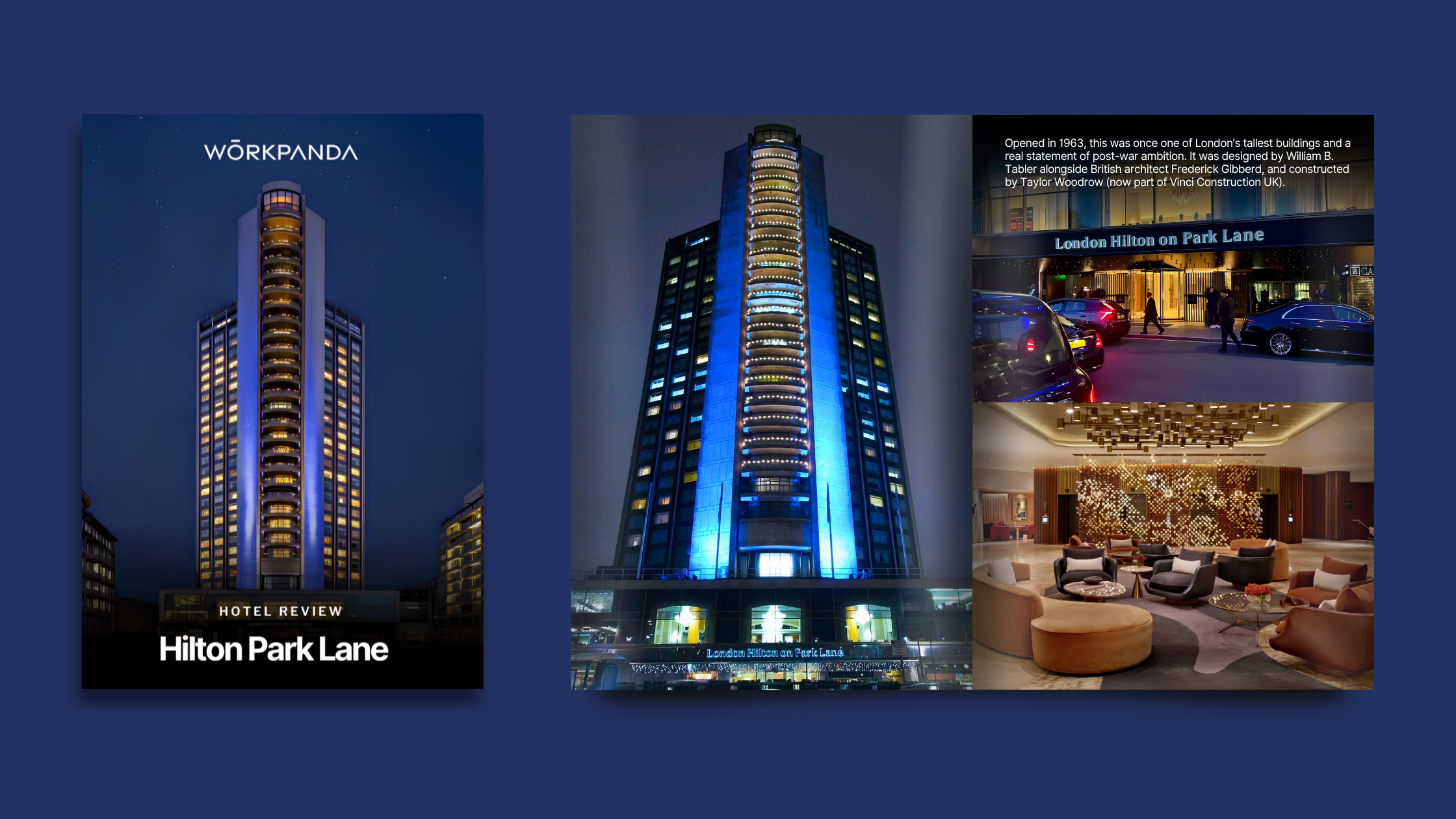
Opened in 1963, this was once one of London’s tallest buildings and a real statement of post-war ambition. It was designed by William B. Tabler alongside British architect Frederick Gibberd, and constructed by Taylor Woodrow (now part of Vinci Construction UK).

Developed under Hilton Hotels & Resorts, the building was designed for scale, efficiency, and international business travel, which you still feel today in its layout and structure.

The hotel has undergone several refurbishments, most notably in the 2010s, focused on upgrading rooms and public areas rather than a full redesign. Interiors were led by Hilton’s in-house design standards and various appointed consultants, not a single signature designer.

More recent updates have centred around F&B, with venues like Shanghai Me (interiors by Bishop Design) and MR PORTER London (interiors by Baranowitz + Kronenberg) bringing a more contemporary edge to the property.

This is not a boutique hotel. It’s a high-volume, commercially driven asset:

  • Large floorplates
  • Efficient layouts
  • Built to handle serious occupancy

You’re booking it for:

  • Hyde Park directly opposite
  • Walking distance to Mayfair
  • A central base that just works

Everything else is secondary.

Arrival, Rooms & The Reality of the Stay

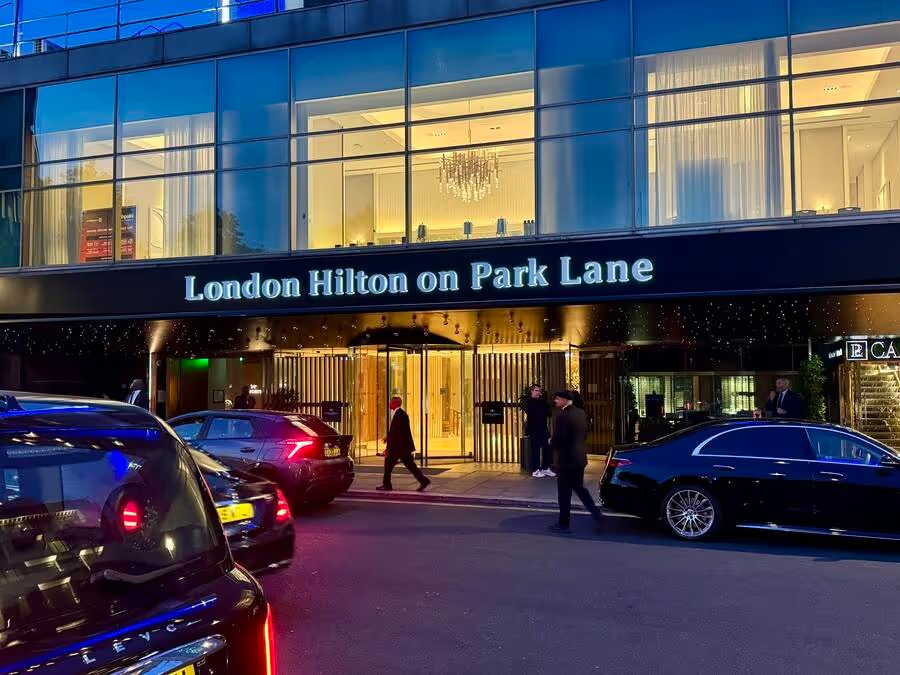
Arrival is exactly what you’d expect from a hotel of this scale: busy, efficient, slightly chaotic, but controlled. The staff are genuinely excellent, polite, professional, and well trained. They move quickly, handle volume well, and keep everything flowing.

We managed to check in two hours early, thanks to Hilton Honors membership, which always helps.

The rooms follow the same logic.

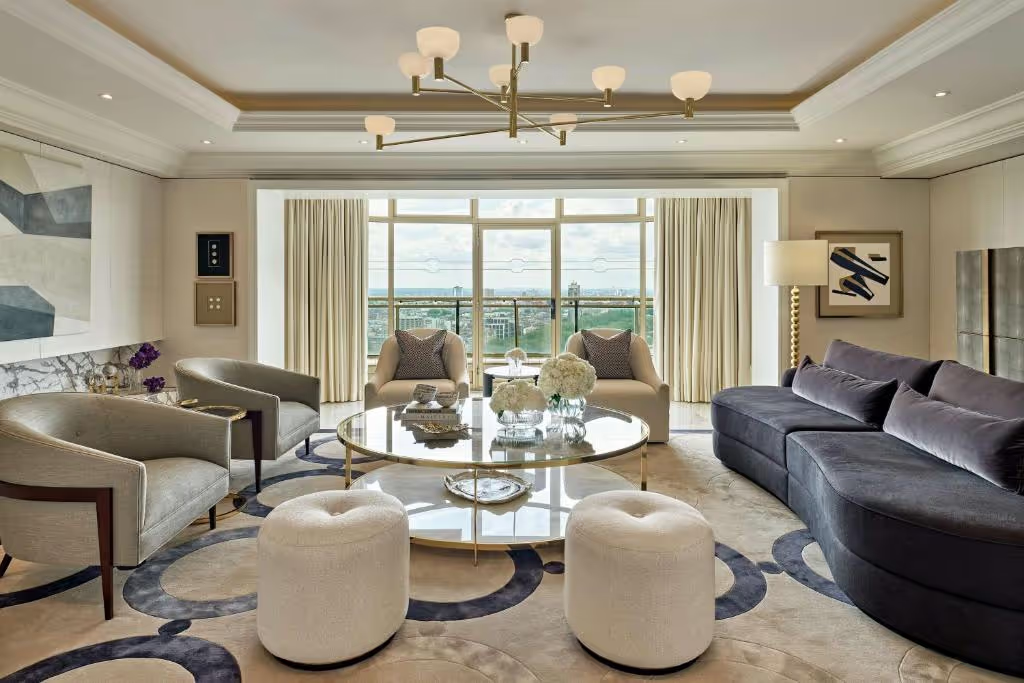
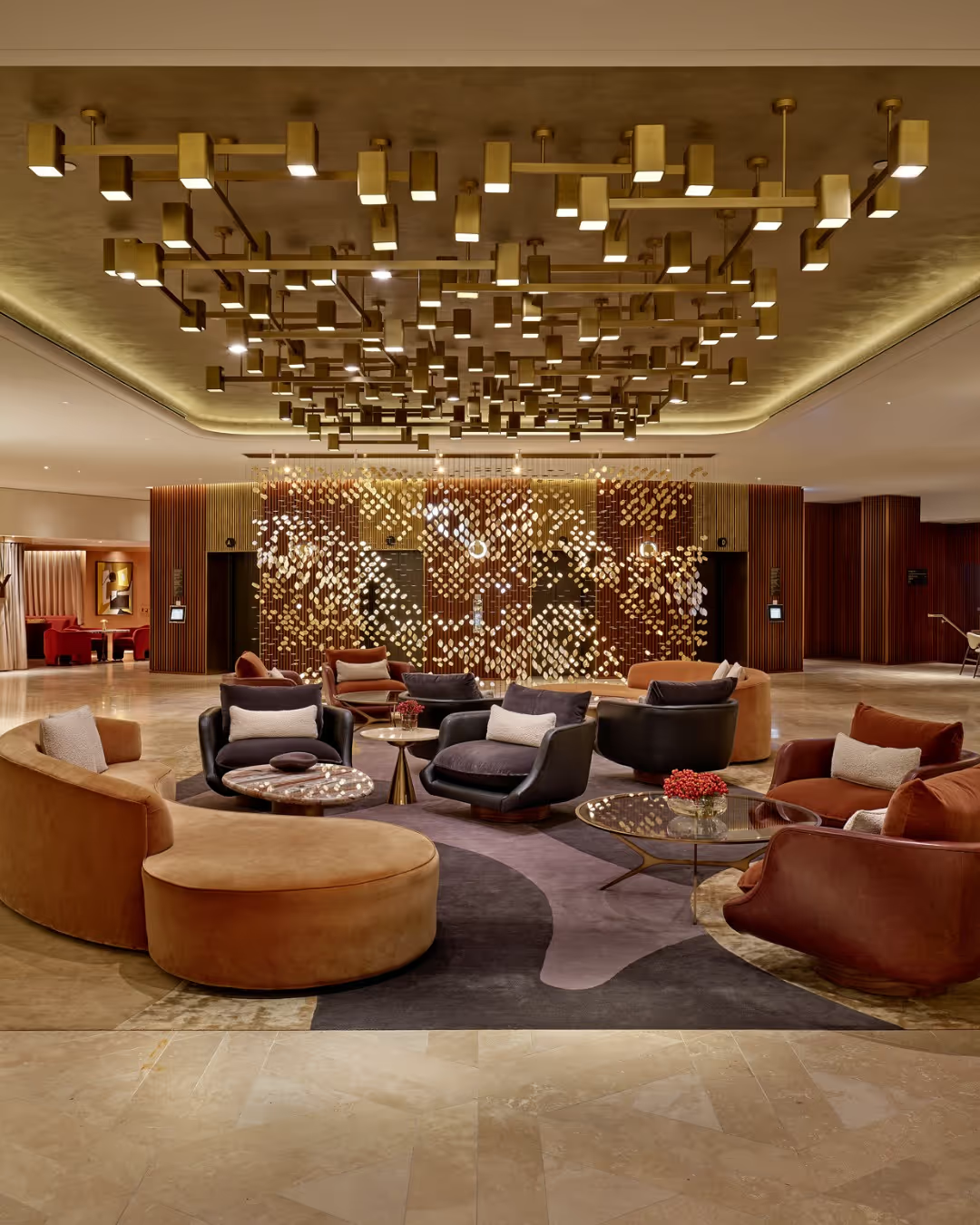
Clean, comfortable, and recently refreshed to a point, but ultimately forgettable. There’s no strong design identity and no real sense of London. It’s what I’d call global Hilton standard, reliable, but not memorable.

London weather was gloomy, but the view made up for it. Overlooking Hyde Park, you get greenery in the foreground and the city moving behind it, and that contrast does all the work.
Now, here’s where it dips slightly.

During my stay, I had:

  • Electricity tripping multiple times
  • Key cards not working consistently
  • Difficulty getting through to reception by phone

This is where my construction brain kicks in. This isn’t a service issue, it’s an infrastructure and systems issue. The building has been upgraded visually, but not fully modernised behind the scenes. At high occupancy, those cracks start to show.

You end up going down to reception more than you’d like, which, at this level, shouldn’t really be happening.

F&B, Design & Where the Hotel Actually Wins

Where this hotel really gets it right is food and beverage. Instead of trying to compete with newer hotels on rooms or design, it’s taken a smarter route, bringing in strong, established brands to stay relevant.

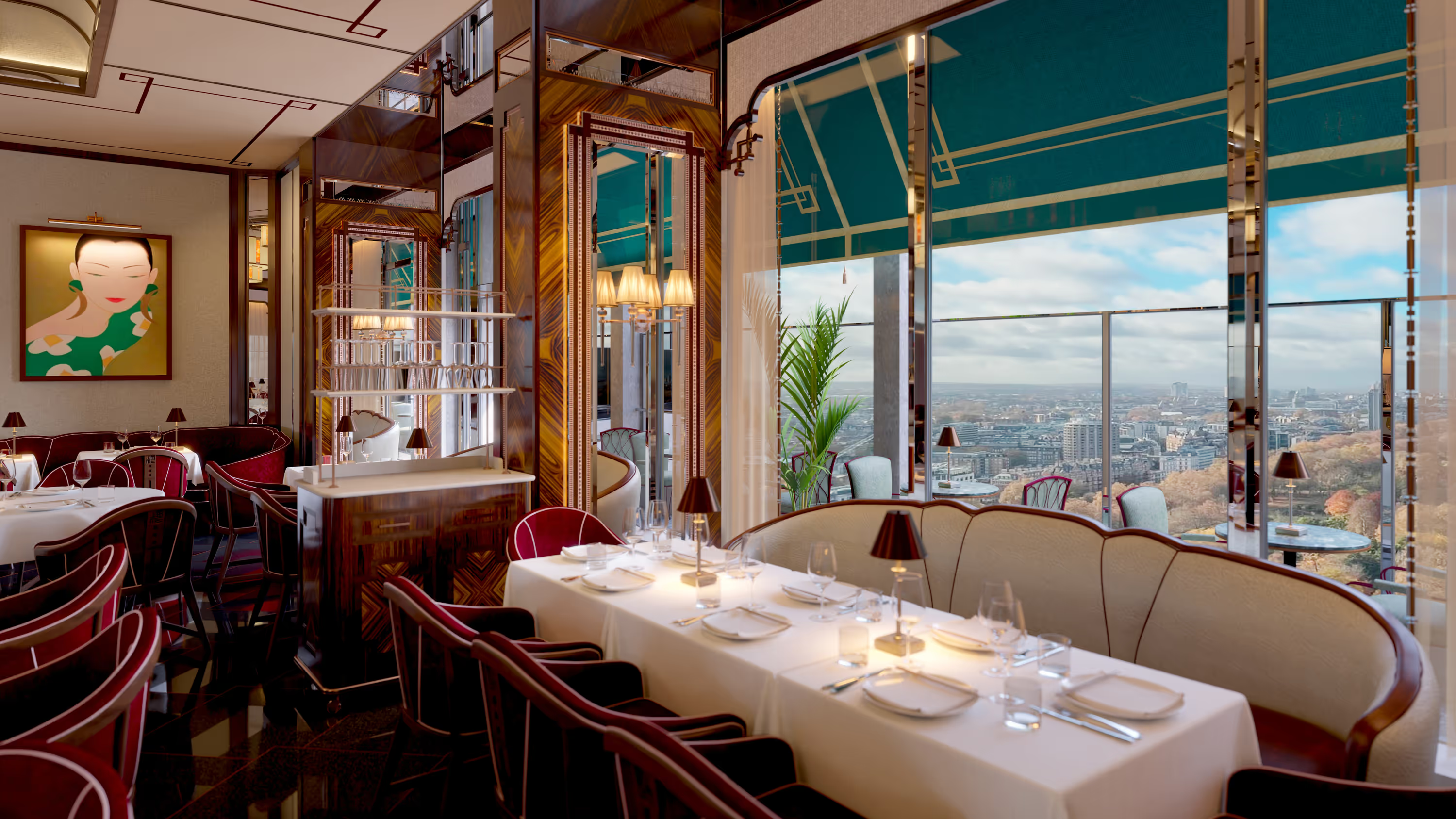
Shanghai Me is the standout. If you’ve been to the Dubai version, it’s the same DNA, high energy, visually bold, and very much built around a social, theatrical dining experience. The interiors are by Bishop Design (great work), known for creating immersive hospitality spaces, and you feel that immediately. It’s easily the most considered design intervention in the entire hotel, to the point where it almost feels like a completely different asset.

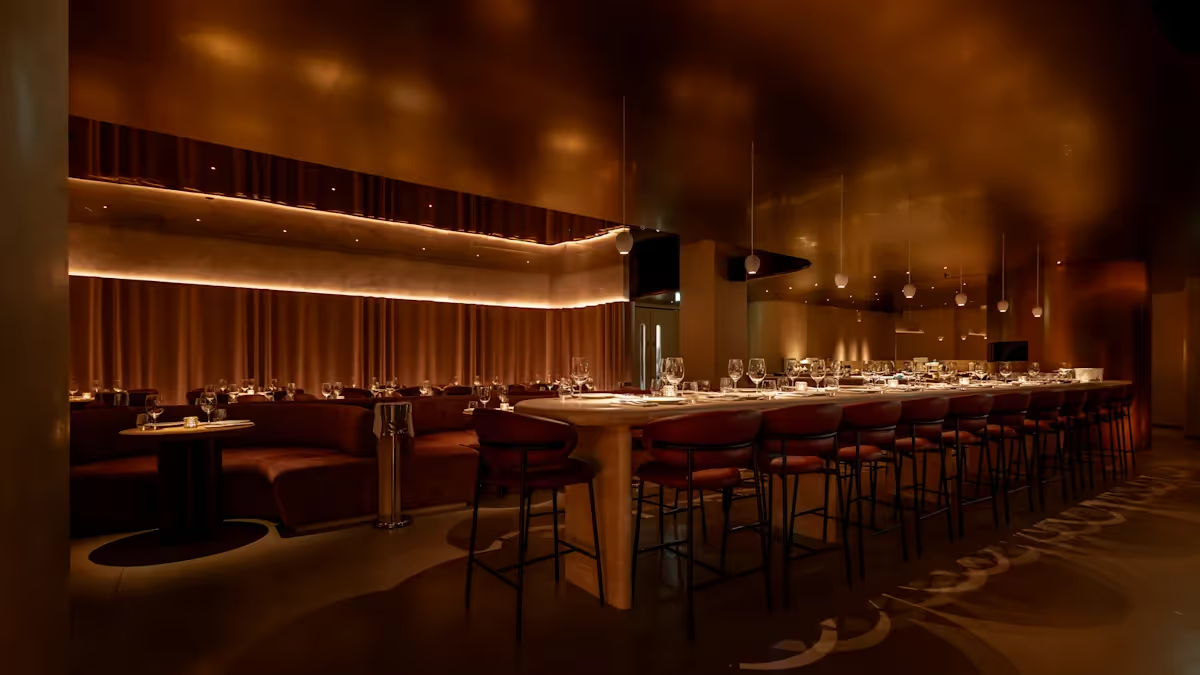
MR PORTER London brings a different tone. Darker, more refined, and far more aligned with London’s nightlife. Less theatrical than Shanghai Me, but more understated and confident. It fits the city well and works as a strong counterbalance within the overall F&B offering.

If you’re staying on Park Lane, you’re honestly spoiled. Within a 5–10 minute radius, you’ve got some of the best dining in London, from classic luxury to proper standout destinations.

London’s Hotel Scene & Where the Competition Has Gone

London’s hotel scene has properly moved on, especially at the top end. The competition now isn’t just strong, it’s stacked with brand-new, design-led, ultra-luxury product that’s resetting expectations.

Recently, a number of serious players have landed:

  • The Peninsula London (Architecture: Hopkins Architects, Interiors: Peter Marino)
  • Raffles London at The OWO (Architecture: EPR Architects, Interiors: Thierry Despont)
  • Mandarin Oriental Mayfair (Architecture: RSHP, Interiors: Studio Indigo)
  • The Chancery Rosewood (Original Architect: Eero Saarinen, Redevelopment: David Chipperfield Architects, Interiors: Joseph Dirand + Tristan Auer)

These aren’t just any other hospitality projects, they’re full-scale repositioning projects; combining architecture, interiors, F&B, and experience into one cohesive product.

The next wave is even stronger:

  • Six Senses London (Architecture: EPR Architects, Interiors: AvroKO)
  • Waldorf Astoria Admiralty Arch (Architecture: Blair Associates, Interiors: Goddard Littlefair)
  • St. Regis London (Architecture: —, Interiors: — still undisclosed at this stage)
  • Cambridge House Auberge Resorts (Architecture: PDP London, Interiors: — expected high-end boutique designers)

So when you look at older, legacy hotels, it’s not that they’ve dropped in quality.

It’s that the competition has completely changed around them, and it’s doing it with serious investment, serious design talent, and a much clearer point of view

Pricing, Value & Should You Stay?

Rooms here aren’t cheap, so the real question is what you’re actually paying for. Typical rates sit around £350–£700 per night depending on the room and season, with park-view rooms and suites pushing higher.

You’re not paying for cutting-edge design, ultra-luxury finishes, or a curated, memorable experience. You’re paying for location, convenience, brand familiarity (and points), and those Hyde Park views.

If that’s your priority, it makes complete sense. If you’re looking for a hotel experience you’ll remember, this probably isn’t it.

Final Thoughts

London Hilton on Park Lane is a classic example of how powerful real estate can be. Despite its flaws, it still works. It’s busy, relevant, and still commands strong rates.

Why?

Because Park Lane doesn’t move, and Hyde Park doesn’t change.

Would I stay again? Yes, but only when I’m prioritising location over experience. And in London, that’s a trade-off worth understanding.

Looking for a job in the UAE or Southeast Asia? We are hiring for some of the biggest companies, explore current openings here: https://www.workpanda.io/jobs

Follow Shyam Visavadia on LinkedIn for all the insider advice you need to get hired and stay updated with the latest market insights.

I don’t actually get to experience London hotels properly that often because most of the time when I’m back here, I end up staying at my family home. It’s just easier (and free).

But back when I was working at PIF, it was a different story. The budgets were strong, so I had the chance to stay at some of the best hotels in the city - places like The Langham, The Edition, Sanderson, and a handful of other top-tier 5 star properties.

Now that it’s coming out of my own pocket, the decision making changes slightly.

This time, I wanted to try something different, in a location I genuinely enjoy spending time in. For me, booking a hotel in London isn’t really about the room, it’s about the postcode.

Scroll through any booking platform and you’ll see the usual mix: boutique Mayfair hotels, lifestyle brands, ultra luxury names all trying to justify their rates with “experiences.” I’ll be honest, I did look at the newly renovated Rosewood Chancery Lane, but at around £1,300 a night, I’d need to close a few more deals before justifying that.

Then there’s London Hilton on Park Lane…

I’ve driven past it countless times thinking, “I’ll stay here one day”, and while I’ve been fortunate enough to stay at some of the best hotels in the world, that curiosity never really went away.

The Building, The Brand & What You’re Really Buying

Opened in 1963, this was once one of London’s tallest buildings and a real statement of post-war ambition. It was designed by William B. Tabler alongside British architect Frederick Gibberd, and constructed by Taylor Woodrow (now part of Vinci Construction UK).

Developed under Hilton Hotels & Resorts, the building was designed for scale, efficiency, and international business travel, which you still feel today in its layout and structure.

The hotel has undergone several refurbishments, most notably in the 2010s, focused on upgrading rooms and public areas rather than a full redesign. Interiors were led by Hilton’s in-house design standards and various appointed consultants, not a single signature designer.

More recent updates have centred around F&B, with venues like Shanghai Me (interiors by Bishop Design) and MR PORTER London (interiors by Baranowitz + Kronenberg) bringing a more contemporary edge to the property.

This is not a boutique hotel. It’s a high-volume, commercially driven asset:

  • Large floorplates
  • Efficient layouts
  • Built to handle serious occupancy

You’re booking it for:

  • Hyde Park directly opposite
  • Walking distance to Mayfair
  • A central base that just works

Everything else is secondary.

Arrival, Rooms & The Reality of the Stay

Arrival is exactly what you’d expect from a hotel of this scale: busy, efficient, slightly chaotic, but controlled. The staff are genuinely excellent, polite, professional, and well trained. They move quickly, handle volume well, and keep everything flowing.

We managed to check in two hours early, thanks to Hilton Honors membership, which always helps.

The rooms follow the same logic.

Clean, comfortable, and recently refreshed to a point, but ultimately forgettable. There’s no strong design identity and no real sense of London. It’s what I’d call global Hilton standard, reliable, but not memorable.

London weather was gloomy, but the view made up for it. Overlooking Hyde Park, you get greenery in the foreground and the city moving behind it, and that contrast does all the work.

Now, here’s where it dips slightly.

During my stay, I had:

  • Electricity tripping multiple times
  • Key cards not working consistently
  • Difficulty getting through to reception by phone

This is where my construction brain kicks in. This isn’t a service issue, it’s an infrastructure and systems issue. The building has been upgraded visually, but not fully modernised behind the scenes. At high occupancy, those cracks start to show.

You end up going down to reception more than you’d like, which, at this level, shouldn’t really be happening.

F&B, Design & Where the Hotel Actually Wins

Where this hotel really gets it right is food and beverage. Instead of trying to compete with newer hotels on rooms or design, it’s taken a smarter route, bringing in strong, established brands to stay relevant.

Shanghai Me is the standout. If you’ve been to the Dubai version, it’s the same DNA, high energy, visually bold, and very much built around a social, theatrical dining experience. The interiors are by Bishop Design (great work), known for creating immersive hospitality spaces, and you feel that immediately. It’s easily the most considered design intervention in the entire hotel, to the point where it almost feels like a completely different asset.

MR PORTER London brings a different tone. Darker, more refined, and far more aligned with London’s nightlife. Less theatrical than Shanghai Me, but more understated and confident. It fits the city well and works as a strong counterbalance within the overall F&B offering.
If you’re staying on Park Lane, you’re honestly spoiled. Within a 5–10 minute radius, you’ve got some of the best dining in London, from classic luxury to proper standout destinations.

London’s Hotel Scene & Where the Competition Has Gone

London’s hotel scene has properly moved on, especially at the top end. The competition now isn’t just strong, it’s stacked with brand-new, design-led, ultra-luxury product that’s resetting expectations.

Recently, a number of serious players have landed:

  • The Peninsula London (Architecture: Hopkins Architects, Interiors: Peter Marino)
  • Raffles London at The OWO (Architecture: EPR Architects, Interiors: Thierry Despont)
  • Mandarin Oriental Mayfair (Architecture: RSHP, Interiors: Studio Indigo)
  • The Chancery Rosewood (Original Architect: Eero Saarinen, Redevelopment: David Chipperfield Architects, Interiors: Joseph Dirand + Tristan Auer)

These aren’t just any other hospitality projects, they’re full-scale repositioning projects; combining architecture, interiors, F&B, and experience into one cohesive product.

The next wave is even stronger:

  • Six Senses London (Architecture: EPR Architects, Interiors: AvroKO)
  • Waldorf Astoria Admiralty Arch (Architecture: Blair Associates, Interiors: Goddard Littlefair)
  • St. Regis London (Architecture: —, Interiors: — still undisclosed at this stage)
  • Cambridge House Auberge Resorts (Architecture: PDP London, Interiors: — expected high-end boutique designers)

So when you look at older, legacy hotels, it’s not that they’ve dropped in quality.

It’s that the competition has completely changed around them, and it’s doing it with serious investment, serious design talent, and a much clearer point of view

Pricing, Value & Should You Stay?

Rooms here aren’t cheap, so the real question is what you’re actually paying for. Typical rates sit around £350–£700 per night depending on the room and season, with park-view rooms and suites pushing higher.

You’re not paying for cutting-edge design, ultra-luxury finishes, or a curated, memorable experience. You’re paying for location, convenience, brand familiarity (and points), and those Hyde Park views.

If that’s your priority, it makes complete sense. If you’re looking for a hotel experience you’ll remember, this probably isn’t it.

Final Thoughts

London Hilton on Park Lane is a classic example of how powerful real estate can be. Despite its flaws, it still works. It’s busy, relevant, and still commands strong rates.

Why?

Because Park Lane doesn’t move, and Hyde Park doesn’t change.

Would I stay again? Yes, but only when I’m prioritising location over experience. And in London, that’s a trade-off worth understanding.

Looking for a job in the UAE or Southeast Asia? We are hiring for some of the biggest companies, explore current openings here: https://www.workpanda.io/jobs

Follow Shyam Visavadia on LinkedIn for all the insider advice you need to get hired and stay updated with the latest market insights.

IN THIS ARTICLE

Get Your Resource

Download valuable resources to guide your next steps.
Get now

IN THIS ARTICLE

Get Your Resource

Download valuable resources to guide your next steps.
Get now