The Naka Island, Phuket : Is this still one of Phuket’s most underrated luxury escapes?

category

*

Hotel Reviews

I’ll be honest, Phuket is one of those places where the hotel market can feel slightly overwhelming.

You have everything here.

Big family resorts. Wellness retreats. Party hotels. Beach clubs pretending to be luxury. Branded residences. Ultra-luxury cliffside villas. And then the usual “hidden gem” claims that are not really hidden and definitely not always gems.

But The Naka Island feels different.

Not because it is the flashiest hotel in Phuket. It isn’t.

Not because it has the most dramatic architecture. It doesn’t.

And not because it is trying to compete with Amanpuri, Rosewood, Trisara, Six Senses Yao Noi, or the next wave of ultra-luxury hotels arriving in the region.

It works because it has something increasingly rare in Phuket: privacy, space, and a real sense of arrival.

You don’t just pull up to the lobby and check in.

You arrive by boat.

And that changes the whole tone of the stay before you have even reached the island.

The Island, The Brand & What You’re Really Buying

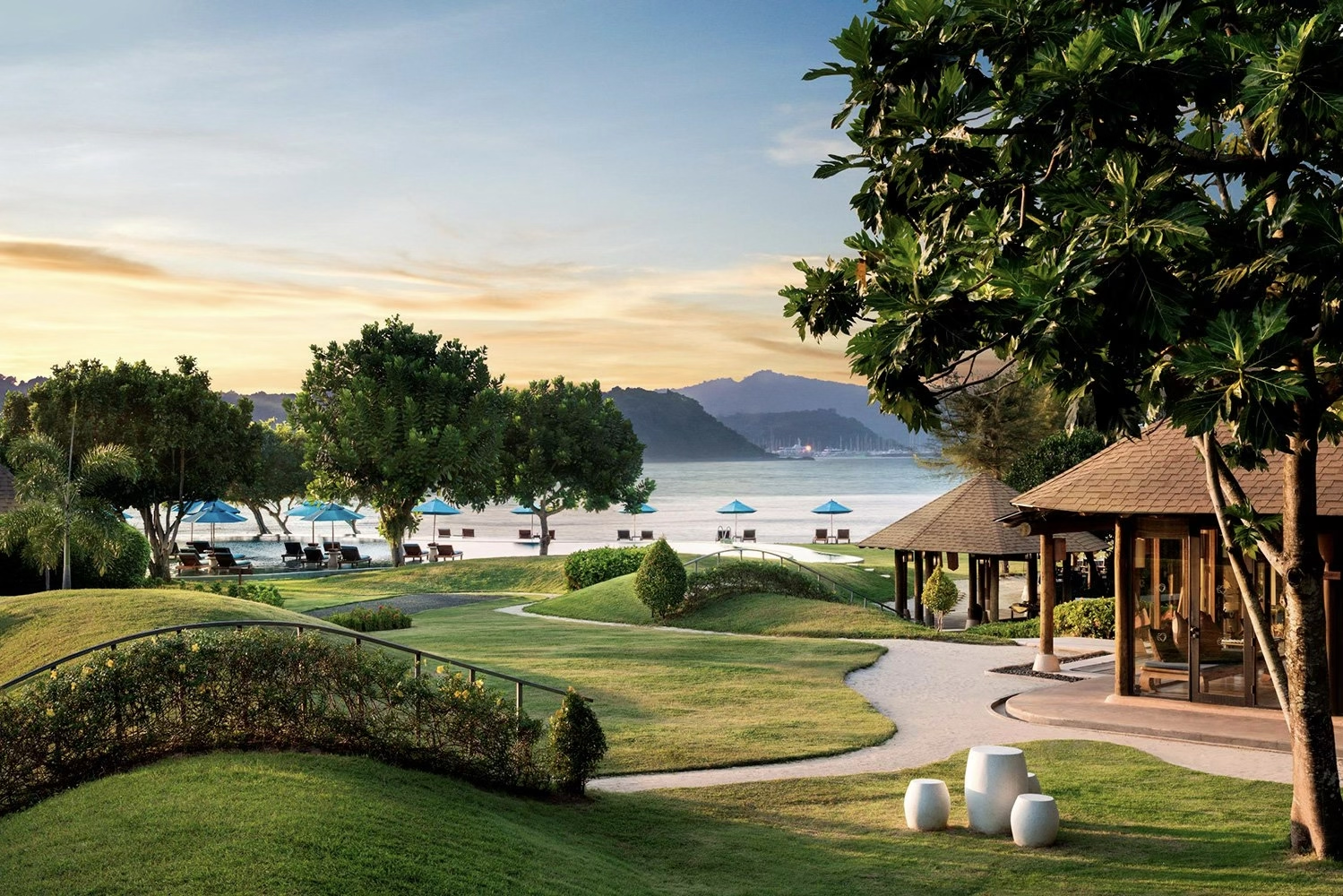
The Naka Island, a Luxury Collection Resort & Spa, Phuket is located on Naka Yai Island, just off the east coast of Phuket. The resort is reached by speedboat and sits among coconut groves, ivory beaches, limestone scenery and the Andaman Sea.

And that is really the point.

You are not buying “Phuket nightlife.”

You are not buying Patong.

You are not buying dramatic cliffside architecture.

You are buying separation.

A small boat ride is a very simple thing, but psychologically, it does a lot. It creates a feeling that you have left Phuket behind, even though you are still close enough to get back to the airport, marina or mainland without any real effort.

That is the power of this asset.

  • Private island positioning
  • Beachfront land
  • Low-density resort feel
  • Villas rather than hotel corridors
  • Marriott Bonvoy distribution
  • A strong legacy story

For a lot of travellers, that combination is more valuable than another polished lobby with marble, a branded beach club and a DJ trying too hard at sunset.
The Six Senses History

Before it became The Naka Island under The Luxury Collection, this property had a very different identity.

It was originally known as Six Senses Sanctuary Phuket, designed as a retreat-style resort with a strong wellness, privacy and nature-led philosophy. Habita Architects describe the original design objective as creating a retreat resort focused on guest wellness, respect for the existing environment and sustainable tourism.

And you can still feel that DNA.

The layout is not like a typical commercial resort where everything is built around central efficiency. It feels more scattered, more private, more retreat-like. The villas are set back, the landscape does a lot of the work, and there is still a softness to the resort that feels very Six Senses in spirit.

That is probably why the property still has a certain charm.

A lot of hotels lose their soul after changing flags.

This one hasn’t completely.

Yes, it is now part of Marriott’s Luxury Collection. Yes, it has the systems, loyalty programme and commercial polish that come with that. But underneath it, the bones still feel like a wellness retreat that was designed before every hotel in Asia started calling itself “barefoot luxury.”

That matters.

Because in today’s hospitality market, authenticity is often manufactured.

Here, it feels slightly more organic.

The Recent Refurbishment & Why It Matters

This is where the story becomes more interesting.

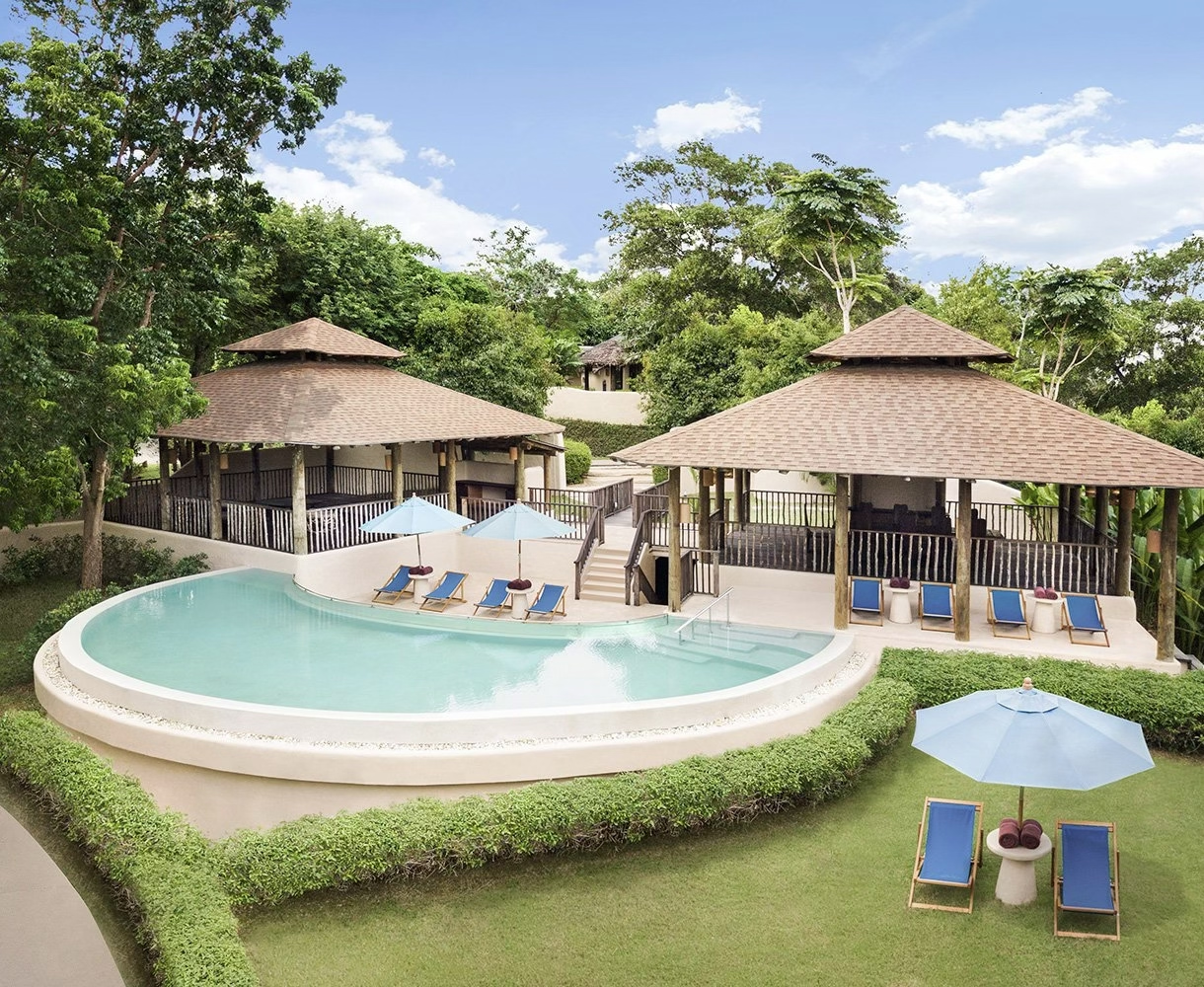
The Naka Island has recently gone through a series of enhancements, including a refreshed beachside infinity pool, private pools in every villa, reimagined restaurants and bars, and an expanded spa offering. The 2025 refurbishment coverage specifically highlighted the renovated Beachside Infinity Pool, upgraded tiles, improved safety features and a dedicated kids’ zone.

This is important because properties like this can age quickly.

Island resorts are hard to maintain.

Salt air, humidity, heat, rain, constant guest movement, landscaping, pools, timber, roofs, MEP systems — everything gets punished. A resort can photograph well and still feel tired when you are actually there.

So the recent refurbishment is not just cosmetic. It is asset protection.

You can tell the strategy here is not to completely reinvent the resort. It is more about sharpening the product:

  • Refresh the pool
  • Improve the villas
  • Upgrade the F&B
  • Strengthen the spa
  • Keep the island character
  • Make it more competitive again

That is the right approach.

Because if you over-design a resort like this, you risk killing what made it special in the first place.

The Naka Island should not become a glossy, over-styled Instagram resort.

It needs to remain calm, private and slightly understated.

Arrival, Rooms & The Reality of the Stay

Arrival is one of the best parts of the experience.

There is something about arriving by speedboat that instantly makes a hotel feel more special. It doesn’t need to be dramatic or over-produced. The water, the movement, the island slowly coming into view — it does the work for you.

The rooms and villas follow the same logic.

They are not trying to compete with the most design-forward resorts in Phuket, but they offer what most people actually want on an island stay:

  • Space
  • Privacy
  • Outdoor areas
  • A pool
  • Views
  • Quiet
  • A slower rhythm

The resort’s accommodation includes guest rooms, suites and villas with sea, garden, beach or terrace views. The wider resort offering includes private pool villas, beachfront restaurants, Spa Naka, an infinity pool and island activities such as mangrove discovery and community outreach.

This is the type of place where the room is not necessarily the whole story.

The island is.

You wake up slowly. You walk to breakfast. You sit near the water. You do very little and somehow that becomes the point.

And honestly, that is probably what Phuket needs more of.

Not every stay needs to be over-programmed.

Sometimes luxury is just being left alone properly.

F&B, Spa & Where the Resort Wins

The Naka Island is not a city hotel where F&B needs to carry the whole asset.

It is a resort, so the food and beverage has a different job.

It needs to support the pace of the stay. Breakfast needs to be easy. Lunch needs to be casual. Dinner needs to feel relaxed but still special enough that you don’t feel the need to leave the island every night.

The resort highlights My Grill, Tonsai, Z Bar, The Rum Chapel and Spa Naka as key experiences. Z Bar is probably the most important venue from a positioning point of view.

Every resort needs that one place where the stay has a visual anchor. Somewhere for sunset. Somewhere for a drink. Somewhere that becomes the memory.

The spa is also key.

Given the property’s Six Senses history, wellness should not feel like an add-on here. It should feel like part of the original story. If done properly, Spa Naka can be one of the strongest reasons to choose the resort over a more conventional Phuket beachfront hotel.

This is where The Naka Island can lean into its past without looking dated.

Wellness. Privacy. Nature. Space.

Those are not old ideas.

They are exactly what the luxury market is moving back towards.

Phuket’s Luxury Hotel Scene Has Moved On

This is the challenge.

Phuket is no longer just competing with itself.

It is competing with Koh Samui, Bali, the Maldives, Vietnam, Phang Nga, Krabi, and even parts of the Middle East where resorts are being built with ridiculous budgets.

The top end of the Phuket market is becoming more serious.

Amanpuri still has the legacy.

Trisara still has the private villa reputation.

Rosewood Phuket brought a more contemporary ultra-luxury product.

Six Senses Yao Noi still owns a very particular kind of barefoot luxury.

COMO Point Yamu has its own design-led identity.

And then you have a wave of branded residences, wellness retreats, and luxury villa developments reshaping the wider Phuket and Phang Nga market.

So The Naka Island sits in an interesting place.

It is not trying to be the most expensive.

It is not trying to be the most architecturally dramatic.

It is not trying to be the newest.

Its advantage is that it already has what developers are desperately trying to create: an island story, a sense of privacy, and real resort land.

That is hard to replicate.

The Four Seasons Conversation

There is also a bigger market story happening around Phuket and Phang Nga.

Four Seasons currently lists its Thailand hotels in Koh Samui, Chiang Mai, Golden Triangle and Bangkok, with no official Phuket resort shown on its Thailand destination page at the time of writing.

However, the luxury pipeline around Phuket is heating up.

A recently announced Four Seasons resort and branded residences at Aquella in Phang Nga is planned within a large integrated resort community near Phuket. The project is expected to include beachfront villas, guest rooms, wellness, dining and branded residences, with Four Seasons managing the hospitality and residential components.

To be clear, based on the official information available, this is not the same as saying Four Seasons is opening on Naka Island itself. It is better understood as part of the wider Phuket and Phang Nga luxury resort market, which is moving further upmarket.

The direction of travel is obvious.

This part of southern Thailand is moving further upmarket.

The arrival of brands like Four Seasons in the wider Phuket and Phang Nga area will only raise expectations. Better design, better wellness, better villas, better service, better F&B, and higher rates.

For The Naka Island, that is both a threat and an opportunity.

The threat is obvious: newer products will arrive with bigger budgets and stronger design narratives.

The opportunity is that The Naka Island already has island exclusivity. If the refurbishment continues in the right direction, it can stay relevant without needing to become something it isn’t.

Pricing, Value & Who Should Stay Here?

The Naka Island makes the most sense for people who want quiet luxury without going fully into ultra-luxury pricing.

It is ideal for:

  • Couples
  • Honeymooners
  • Marriott Bonvoy members
  • Wellness-focused travellers
  • People who want privacy
  • Families who want space but not chaos
  • Travellers who want Phuket without feeling like they are in Phuket

It is probably not right for:

  • Party travellers
  • People who want nightlife every night
  • Guests who need endless restaurant choice
  • Travellers who want a highly polished city-hotel experience
  • Anyone expecting Aman-level design, service and finish

This is not a resort you book because you want to be seen.

You book it because you want to disappear for a few days.

And there is a big difference.

Final Thoughts

The Naka Island is a reminder that hospitality is not always about being the newest, the loudest or the most expensive.

Sometimes it is about having the right land, the right story, and the right feeling.

The property has history. It has Six Senses DNA. It has island privacy. It has Marriott’s global platform. And now, with the recent refurbishment, it feels like the resort is being carefully brought into its next chapter rather than completely rewritten.

That is the right move.

Because The Naka Island should not try to become Rosewood, Aman, Four Seasons or Six Senses again.

It should be itself.

A quiet, private island resort with enough luxury to feel special, enough space to breathe, and enough history to make it more interesting than another generic five-star beach hotel.

Would I stay again?

Yes.

tBut I would go for the island, not just the room.

And in Phuket, that is a very important distinction.

Looking for a job in the UAE or Southeast Asia? We are hiring for some of the biggest companies. Explore current openings here: https://www.workpanda.io/jobs

Follow Shyam Visavadia on LinkedIn for insider advice on construction, architecture, design, hospitality and the latest market insights.

I’ll be honest, Phuket is one of those places where the hotel market can feel slightly overwhelming.

You have everything here.

Big family resorts. Wellness retreats. Party hotels. Beach clubs pretending to be luxury. Branded residences. Ultra-luxury cliffside villas. And then the usual “hidden gem” claims that are not really hidden and definitely not always gems.

But The Naka Island feels different.

Not because it is the flashiest hotel in Phuket. It isn’t.

Not because it has the most dramatic architecture. It doesn’t.

And not because it is trying to compete with Amanpuri, Rosewood, Trisara, Six Senses Yao Noi, or the next wave of ultra-luxury hotels arriving in the region.

It works because it has something increasingly rare in Phuket: privacy, space, and a real sense of arrival.

You don’t just pull up to the lobby and check in.

You arrive by boat.

And that changes the whole tone of the stay before you have even reached the island.

The Island, The Brand & What You’re Really Buying

The Naka Island, a Luxury Collection Resort & Spa, Phuket is located on Naka Yai Island, just off the east coast of Phuket. The resort is reached by speedboat and sits among coconut groves, ivory beaches, limestone scenery and the Andaman Sea.

And that is really the point.

You are not buying “Phuket nightlife.”

You are not buying Patong.

You are not buying dramatic cliffside architecture.

You are buying separation.

A small boat ride is a very simple thing, but psychologically, it does a lot. It creates a feeling that you have left Phuket behind, even though you are still close enough to get back to the airport, marina or mainland without any real effort.

That is the power of this asset.

  • Private island positioning
  • Beachfront land
  • Low-density resort feel
  • Villas rather than hotel corridors
  • Marriott Bonvoy distribution
  • A strong legacy story

For a lot of travellers, that combination is more valuable than another polished lobby with marble, a branded beach club and a DJ trying too hard at sunset.

The Six Senses History

Before it became The Naka Island under The Luxury Collection, this property had a very different identity.

It was originally known as Six Senses Sanctuary Phuket, designed as a retreat-style resort with a strong wellness, privacy and nature-led philosophy. Habita Architects describe the original design objective as creating a retreat resort focused on guest wellness, respect for the existing environment and sustainable tourism.

And you can still feel that DNA.

The layout is not like a typical commercial resort where everything is built around central efficiency. It feels more scattered, more private, more retreat-like. The villas are set back, the landscape does a lot of the work, and there is still a softness to the resort that feels very Six Senses in spirit.

That is probably why the property still has a certain charm.

A lot of hotels lose their soul after changing flags.

This one hasn’t completely.

Yes, it is now part of Marriott’s Luxury Collection. Yes, it has the systems, loyalty programme and commercial polish that come with that. But underneath it, the bones still feel like a wellness retreat that was designed before every hotel in Asia started calling itself “barefoot luxury.”

That matters.

Because in today’s hospitality market, authenticity is often manufactured.

Here, it feels slightly more organic.

The Recent Refurbishment & Why It Matters

This is where the story becomes more interesting.

The Naka Island has recently gone through a series of enhancements, including a refreshed beachside infinity pool, private pools in every villa, reimagined restaurants and bars, and an expanded spa offering. The 2025 refurbishment coverage specifically highlighted the renovated Beachside Infinity Pool, upgraded tiles, improved safety features and a dedicated kids’ zone.

This is important because properties like this can age quickly.

Island resorts are hard to maintain.

Salt air, humidity, heat, rain, constant guest movement, landscaping, pools, timber, roofs, MEP systems — everything gets punished. A resort can photograph well and still feel tired when you are actually there.

So the recent refurbishment is not just cosmetic. It is asset protection.

You can tell the strategy here is not to completely reinvent the resort. It is more about sharpening the product:

  • Refresh the pool
  • Improve the villas
  • Upgrade the F&B
  • Strengthen the spa
  • Keep the island character
  • Make it more competitive again

That is the right approach.

Because if you over-design a resort like this, you risk killing what made it special in the first place.

The Naka Island should not become a glossy, over-styled Instagram resort.

It needs to remain calm, private and slightly understated.

Arrival, Rooms & The Reality of the Stay

Arrival is one of the best parts of the experience.

There is something about arriving by speedboat that instantly makes a hotel feel more special. It doesn’t need to be dramatic or over-produced. The water, the movement, the island slowly coming into view — it does the work for you.

The rooms and villas follow the same logic.

They are not trying to compete with the most design-forward resorts in Phuket, but they offer what most people actually want on an island stay:

  • Space
  • Privacy
  • Outdoor areas
  • A pool
  • Views
  • Quiet
  • A slower rhythm

The resort’s accommodation includes guest rooms, suites and villas with sea, garden, beach or terrace views. The wider resort offering includes private pool villas, beachfront restaurants, Spa Naka, an infinity pool and island activities such as mangrove discovery and community outreach.

This is the type of place where the room is not necessarily the whole story.

The island is.

You wake up slowly. You walk to breakfast. You sit near the water. You do very little and somehow that becomes the point.

And honestly, that is probably what Phuket needs more of.

Not every stay needs to be over-programmed.

Sometimes luxury is just being left alone properly.

F&B, Spa & Where the Resort Wins

The Naka Island is not a city hotel where F&B needs to carry the whole asset.

It is a resort, so the food and beverage has a different job.

It needs to support the pace of the stay. Breakfast needs to be easy. Lunch needs to be casual. Dinner needs to feel relaxed but still special enough that you don’t feel the need to leave the island every night.

The resort highlights My Grill, Tonsai, Z Bar, The Rum Chapel and Spa Naka as key experiences. Z Bar is probably the most important venue from a positioning point of view.

Every resort needs that one place where the stay has a visual anchor. Somewhere for sunset. Somewhere for a drink. Somewhere that becomes the memory.

The spa is also key.

Given the property’s Six Senses history, wellness should not feel like an add-on here. It should feel like part of the original story. If done properly, Spa Naka can be one of the strongest reasons to choose the resort over a more conventional Phuket beachfront hotel.

This is where The Naka Island can lean into its past without looking dated.

Wellness. Privacy. Nature. Space.

Those are not old ideas.

They are exactly what the luxury market is moving back towards.

Phuket’s Luxury Hotel Scene Has Moved On

This is the challenge.

Phuket is no longer just competing with itself.

It is competing with Koh Samui, Bali, the Maldives, Vietnam, Phang Nga, Krabi, and even parts of the Middle East where resorts are being built with ridiculous budgets.

The top end of the Phuket market is becoming more serious.

Amanpuri still has the legacy.

Trisara still has the private villa reputation.

Rosewood Phuket brought a more contemporary ultra-luxury product.

Six Senses Yao Noi still owns a very particular kind of barefoot luxury.

COMO Point Yamu has its own design-led identity.

And then you have a wave of branded residences, wellness retreats, and luxury villa developments reshaping the wider Phuket and Phang Nga market.

So The Naka Island sits in an interesting place.

It is not trying to be the most expensive.

It is not trying to be the most architecturally dramatic.

It is not trying to be the newest.

Its advantage is that it already has what developers are desperately trying to create: an island story, a sense of privacy, and real resort land.

That is hard to replicate.
The Four Seasons Conversation

There is also a bigger market story happening around Phuket and Phang Nga.

Four Seasons currently lists its Thailand hotels in Koh Samui, Chiang Mai, Golden Triangle and Bangkok, with no official Phuket resort shown on its Thailand destination page at the time of writing.

However, the luxury pipeline around Phuket is heating up.

A recently announced Four Seasons resort and branded residences at Aquella in Phang Nga is planned within a large integrated resort community near Phuket. The project is expected to include beachfront villas, guest rooms, wellness, dining and branded residences, with Four Seasons managing the hospitality and residential components.

To be clear, based on the official information available, this is not the same as saying Four Seasons is opening on Naka Island itself. It is better understood as part of the wider Phuket and Phang Nga luxury resort market, which is moving further upmarket.

The direction of travel is obvious.

This part of southern Thailand is moving further upmarket.

The arrival of brands like Four Seasons in the wider Phuket and Phang Nga area will only raise expectations. Better design, better wellness, better villas, better service, better F&B, and higher rates.

For The Naka Island, that is both a threat and an opportunity.

The threat is obvious: newer products will arrive with bigger budgets and stronger design narratives.

The opportunity is that The Naka Island already has island exclusivity. If the refurbishment continues in the right direction, it can stay relevant without needing to become something it isn’t.

Pricing, Value & Who Should Stay Here?

The Naka Island makes the most sense for people who want quiet luxury without going fully into ultra-luxury pricing.

It is ideal for:

  • Couples
  • Honeymooners
  • Marriott Bonvoy members
  • Wellness-focused travellers
  • People who want privacy
  • Families who want space but not chaos
  • Travellers who want Phuket without feeling like they are in Phuket

It is probably not right for:

  • Party travellers
  • People who want nightlife every night
  • Guests who need endless restaurant choice
  • Travellers who want a highly polished city-hotel experience
  • Anyone expecting Aman-level design, service and finish

This is not a resort you book because you want to be seen.

You book it because you want to disappear for a few days.

And there is a big difference.

Final Thoughts

The Naka Island is a reminder that hospitality is not always about being the newest, the loudest or the most expensive.

Sometimes it is about having the right land, the right story, and the right feeling.

The property has history. It has Six Senses DNA. It has island privacy. It has Marriott’s global platform. And now, with the recent refurbishment, it feels like the resort is being carefully brought into its next chapter rather than completely rewritten.

That is the right move.

Because The Naka Island should not try to become Rosewood, Aman, Four Seasons or Six Senses again.

It should be itself.

A quiet, private island resort with enough luxury to feel special, enough space to breathe, and enough history to make it more interesting than another generic five-star beach hotel.

Would I stay again?

Yes.

tBut I would go for the island, not just the room.

And in Phuket, that is a very important distinction.

Looking for a job in the UAE or Southeast Asia? We are hiring for some of the biggest companies. Explore current openings here: https://www.workpanda.io/jobs

Follow Shyam Visavadia on LinkedIn for insider advice on construction, architecture, design, hospitality and the latest market insights.

IN THIS ARTICLE

Get Your Resource

Download valuable resources to guide your next steps.
Get now

IN THIS ARTICLE

Get Your Resource

Download valuable resources to guide your next steps.
Get now